
How to incorporate symbolism in fashion for style
You scroll through your wardrobe, packed with trendy pieces and basic staples, yet nothing feels truly yours. Each item serves a function, but none carries a story or reflects who you are beneath the surface. Fashion can become a hollow performance when disconnected from meaning, leaving you feeling like a mannequin rather than an individual. Incorporating symbolism transforms this dynamic, turning your clothing into a visual language that expresses resilience, values, and self-awareness. This guide shows you how to weave meaningful symbols into minimalist fashion, creating a wardrobe that speaks authentically about your identity whilst maintaining clean, sophisticated aesthetics.
Table of Contents
Key takeaways
| Point | Details |
|---|---|
| Symbolism creates identity | Clothing becomes a form of self-expression when infused with personal meaning and narrative |
| Minimalism enhances awareness | Pairing simplicity with symbols builds emotional resilience and intentional living |
| Motifs carry messages | Animal imagery, cultural icons, and colours communicate values without words |
| Accessories deepen connection | Personalised details strengthen your visual story and authentic engagement |
| Stealth branding values subtlety | Sophisticated consumers prefer understated exclusivity over loud logos |
Preparing to incorporate symbolism in your wardrobe
Before adding symbolic elements to your clothing, you need a solid foundation rooted in authenticity rather than aesthetic performance. Minimalism is about thoughtful engagement and sincerity, not simply owning fewer items or following a monochrome trend. True minimalism requires examining your values, identity, and what you want your appearance to communicate. This introspection separates meaningful fashion from empty consumerism disguised as simplicity.
Start by identifying the core values that define you. Are you drawn to resilience, independence, connection to nature, or philosophical reflection? Write down three to five principles that guide your decisions and relationships. These become the filter through which you select symbolic elements. Without this clarity, you risk choosing symbols because they look interesting rather than because they genuinely resonate with your lived experience.
Next, audit your existing wardrobe for foundational pieces. You need neutral colours and simple silhouettes that serve as a canvas for symbolic details. Look for well-constructed basics in black, white, grey, navy, or earth tones. Quality matters more than quantity here. A single excellent hoodie or pair of trousers provides more versatility than five mediocre alternatives. These pieces anchor your look whilst allowing symbolic accessories or subtle motifs to stand out without visual competition.
Consider the difference between acquiring symbols and living them. Purchasing a piece with meaningful imagery only works if that symbol reflects something authentic about your journey. A stag motif representing renewal means nothing if you have not experienced transformation or do not value growth. Symbols function as visual shorthand for your internal narrative, so choose elements that genuinely align with your experiences and aspirations.
Pro Tip: Create a mood board before shopping, collecting images of symbols, colours, and styles that resonate emotionally. This visual reference prevents impulse purchases and keeps your wardrobe cohesive as you add meaningful pieces over time.
Gather these foundational elements:
-
Three to five high-quality neutral basics (hoodies, shirts, trousers)
-
A clear list of personal values and identity markers
-
Visual references for symbols that authentically represent your journey
-
Understanding of how meaningful minimalist fashion differs from trend-driven consumption
Choosing and understanding meaningful symbols for fashion
Symbols in fashion work as non-verbal communication, allowing you to express identity, beliefs, and values without speaking. Symbolism in fashion functions as a form of self-expression, creating layers of meaning that resonate with both the wearer and observant viewers. Understanding different symbolic categories helps you select elements that genuinely reflect your narrative rather than adopting imagery because it looks aesthetically pleasing.
Animal motifs carry powerful associations across cultures and personal interpretation. A stag represents strength, renewal, and independence whilst connecting you to natural cycles and resilience. Birds symbolise freedom and perspective. Wolves embody loyalty and instinct. Choose animals that mirror traits you cultivate or aspire towards, not creatures you find merely attractive. The symbol should feel like an extension of your character, a visual representation of qualities you actively develop.
Cultural symbols link you to heritage, philosophy, or movements that shaped your worldview. These require careful consideration to avoid appropriation or superficial adoption. If you wear symbols from cultures not your own, invest time understanding their meanings, contexts, and significance. Respectful engagement means recognising these are not decorative elements but carry weight for communities who created them. When worn authentically, cultural symbols deepen your connection to shared human experiences and philosophical traditions.
Colours communicate mood and personality silently, functioning as symbolic language without imagery. Black conveys sophistication and introspection. White suggests clarity and renewal. Earth tones ground you in nature and stability. Red expresses passion or urgency. Your colour choices should align with the emotional tone you want to project and the psychological state you wish to cultivate. Consistent colour palettes create visual coherence whilst reinforcing your symbolic narrative.
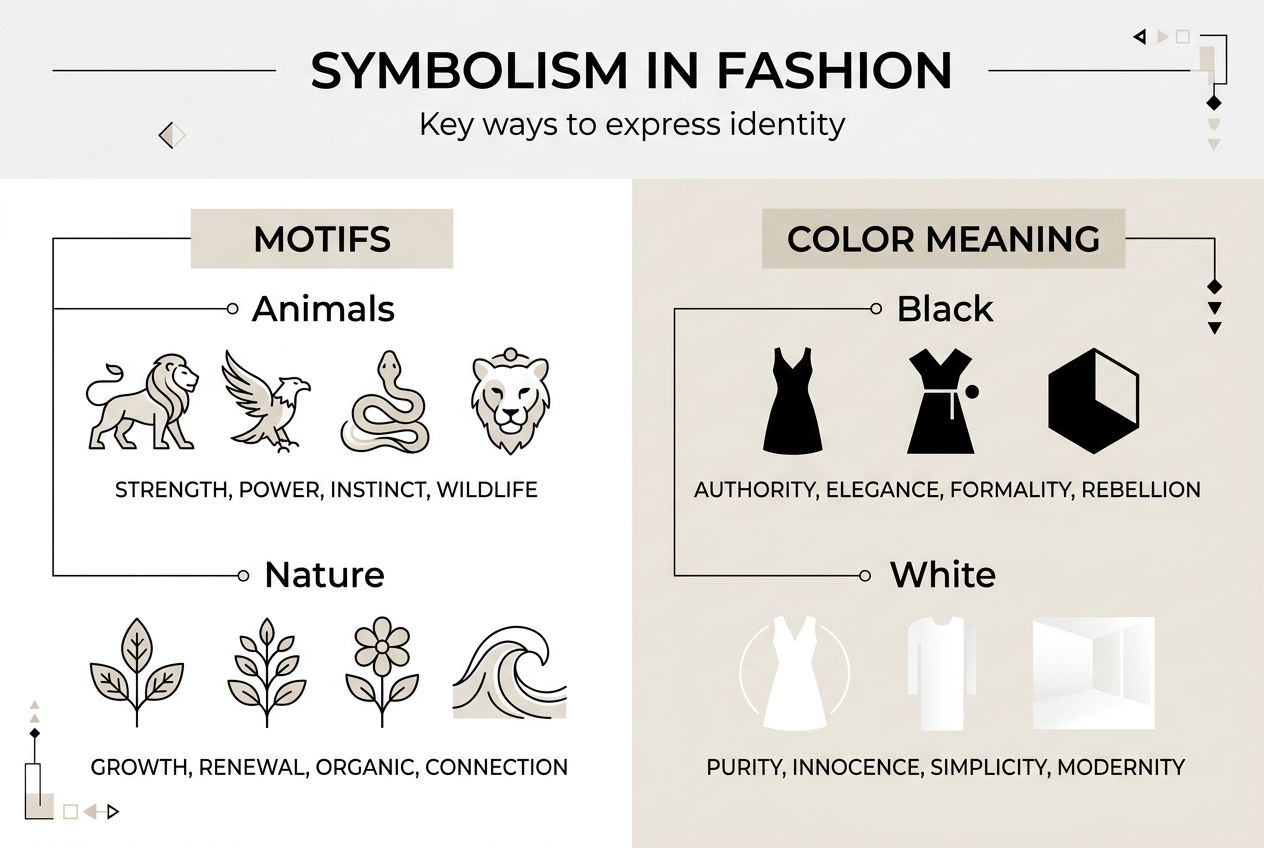
Silent luxury brands command higher prices due to valued subtlety and individuality, reflecting a shift towards stealth branding. Sophisticated consumers increasingly prefer understated quality over conspicuous logos, seeking exclusivity through craftsmanship and meaningful design rather than visible brand markers. This trend aligns perfectly with symbolic minimalism, where personal meaning outweighs external validation.
| Symbol category | Example | Core meaning | Application |
|---|---|---|---|
| Animal motifs | Stag | Resilience, renewal, independence | Subtle embroidery or prints on basics |
| Cultural icons | Stoic symbols | Philosophy, perspective, discipline | Integrated into designs or accessories |
| Colour psychology | Black and white | Sophistication, clarity, balance | Foundation for entire wardrobe palette |
| Stealth branding | Minimal logos | Quality, exclusivity, authenticity | Focus on craftsmanship over visibility |
When exploring symbolism in minimalist fashion, prioritise elements that serve multiple functions. A well-designed piece should look aesthetically clean whilst carrying deeper meaning for those who understand the reference. This layered approach creates clothing that works on surface level for casual observers but resonates profoundly with you and others who share your values.
Integrating symbolism effectively into your minimalistic fashion
Adding symbolic elements to a minimalist wardrobe requires restraint and intentionality. The goal is enhancing meaning without compromising the clean aesthetic that defines minimalism. Clothing choices are a form of identity construction, influenced by philosophy and self-perception, making each decision an opportunity to express authentic values through visual language.
Start with your foundational neutral pieces as the base layer. A black hoodie, white shirt, or grey trousers provides the canvas. These items should fit well and feel comfortable, as they will anchor every outfit. Quality basics in simple silhouettes never compete with symbolic details, instead allowing meaningful elements to emerge naturally without visual clutter.
Next, introduce symbolic elements through carefully chosen accessories or subtle motifs. A pendant with personal significance, a ring engraved with a meaningful phrase, or a hoodie featuring understated symbolic artwork adds layers without overwhelming your look. The key is selectivity. One or two symbolic pieces per outfit create impact, whilst five or six dilute the message and drift back towards maximalism.

Balance simplicity with meaningful details by asking whether each addition serves your narrative. Does this bracelet reinforce your values, or does it simply look nice? Does this motif represent genuine aspects of your identity, or are you borrowing aesthetics without substance? Honest answers prevent consumerist impulses disguised as symbolic expression. Every piece should earn its place through authentic connection, not novelty or trend appeal.
Layer symbols to tell your story visually and subtly. Perhaps you wear a symbolic minimalist clothing example featuring philosophical messaging paired with simple trousers and understated footwear. The hoodie carries the narrative weight whilst surrounding pieces provide context and balance. This approach creates cohesive outfits where symbolism enhances rather than dominates.
Maintain authenticity by choosing only symbols you truly identify with, avoiding imagery that looks interesting but lacks personal resonance. If a symbol does not reflect your lived experience, values, or aspirations, it becomes decoration rather than expression. Authenticity requires vulnerability and honesty about who you are and what matters to you, not adopting symbols because they project an image you wish to inhabit.
Pro Tip: Limit yourself to one symbolic focal point per outfit. This constraint forces intentionality and prevents visual overload, ensuring each meaningful element receives attention and communicates clearly.
Follow this integration process:
-
Build outfits starting with neutral foundational pieces
-
Add one symbolic element as the focal point (clothing, accessory, or subtle motif)
-
Ensure surrounding items support rather than compete with the symbol
-
Evaluate whether the complete outfit feels authentic to your identity
-
Remove any piece that feels performative or borrowed rather than genuine
| Approach | Characteristics | Outcome |
|---|---|---|
| Symbolic minimalism | Few meaningful pieces, intentional choices, authentic connection | Cohesive identity, emotional resonance, lasting satisfaction |
| Aesthetic minimalism | Trendy neutrals, surface simplicity, no deeper meaning | Hollow performance, eventual dissatisfaction, continued searching |
| Consumerist symbolism | Many symbolic items, impulsive purchases, borrowed imagery | Visual clutter, diluted message, lack of authenticity |
Verifying and evolving your symbolic fashion style
Once you have built a symbolically meaningful wardrobe, regular evaluation ensures your clothing continues reflecting your authentic self as you grow. Fashion should evolve with your identity, not remain static whilst you change. Verification involves assessing whether your choices genuinely enhance self-awareness and resilience or have drifted back towards empty consumption.
Assess if your clothing reflects your values by examining how you feel when wearing each piece. Do you experience a sense of alignment and confidence, or does something feel off? Meaningful clothing should reinforce your identity, providing psychological grounding throughout your day. If a piece no longer resonates, it may be time to retire it, even if it remains aesthetically pleasing. Authenticity matters more than maintaining a particular look.
Notice psychological effects like increased confidence and emotional resilience. Individuals who choose symbolic clothing consciously report higher self-esteem and stronger identity, suggesting that intentional fashion choices impact mental wellbeing beyond surface appearance. Pay attention to how your wardrobe affects your mood, decision-making, and interactions. Symbolic fashion should empower you, not create pressure to maintain an image.
Avoid falling back into consumerism disguised as minimalism by questioning new purchase impulses. Does this item add genuine value to your narrative, or are you simply bored with existing pieces? True minimalism resists the urge to constantly refresh your wardrobe, instead finding satisfaction in a curated collection that serves you well. If you find yourself frequently shopping for symbolic pieces, examine whether you are seeking external validation rather than internal alignment.
Update symbolic choices as your identity and life evolve. The symbols that resonated five years ago may no longer reflect who you are today. Growth requires releasing outdated representations and embracing new imagery that captures your current journey. This does not mean abandoning your wardrobe entirely, but thoughtfully replacing pieces that no longer serve your narrative with elements that better represent your evolved self.
Seek feedback from trusted peers for authentic alignment. People who know you well can offer perspective on whether your fashion choices genuinely reflect your character or project an inauthentic image. This external input helps identify blind spots and ensures your symbolic fashion communicates what you intend rather than creating unintended impressions.
Use these verification strategies:
-
Conduct quarterly wardrobe audits, removing pieces that no longer resonate emotionally
-
Journal about how specific items make you feel and whether they reinforce your values
-
Ask close friends if your style feels authentic to your personality and growth
-
Notice patterns in which pieces you reach for most often versus those you avoid
Follow this evolution process:
-
Review your core values and identity markers every six months
-
Identify symbols or pieces that no longer align with your current self
-
Research new symbolic elements that better represent your evolved perspective
-
Gradually introduce updated pieces whilst retiring outdated ones
-
Maintain the discipline of one in, one out to prevent wardrobe bloat
Consider exploring reflective minimalist apparel that grows with you, offering timeless symbolism that remains relevant through various life stages. Quality pieces with universal themes like resilience and renewal adapt to your changing narrative without requiring constant replacement.
Explore meaningful minimalist fashion at Memento Vivere Co
Having equipped yourself with the knowledge to build a symbolically rich minimalist wardrobe, consider exploring curated collections designed specifically for this purpose. Memento Vivere Co creates clothing that embodies philosophical depth and timeless symbolism, perfect for individuals seeking fashion that reflects resilience and self-awareness rather than fleeting trends.
Discover pieces like the black tutto passa memento vivere hoodie or white tutto passa memento vivere hoodie, each featuring the brand’s central philosophy: everything passes, so remember to truly live. The stag motif represents strength, renewal, and connection to nature, offering a powerful symbol for those cultivating resilience and perspective. Every piece in the signature collection combines minimalist design with meaningful messaging, creating clothing that serves as daily reminders of purpose and presence. These are not just garments but visual affirmations of the values you carry forward through life’s changing seasons.
FAQ
What types of symbols work best for minimalist fashion?
Simple, subtle symbols like geometric shapes, natural motifs (stag, birds, trees), or culturally meaningful icons fit minimalist aesthetics perfectly. Avoid overly complex or flashy designs that create visual clutter and compete with the clean lines that define minimalism. The most effective symbols communicate clearly without requiring elaborate detail, allowing them to integrate seamlessly into neutral foundational pieces whilst maintaining impact.
How can I avoid consumerism whilst adding symbolic pieces?
Focus on quality over quantity, selecting only symbols that deeply resonate with your lived experience and core values. Prioritise meaningful purchases that build a coherent personal narrative rather than accumulating items because they look interesting. Set a rule of one symbolic piece in, one out to prevent wardrobe bloat. Before buying, wait 30 days to ensure the desire stems from genuine connection rather than impulse or trend influence.
Can symbolism in fashion influence self-confidence?
Yes, symbolic fashion significantly boosts self-awareness and resilience, improving confidence in daily interactions and decision-making. Consciously chosen symbolic clothing enhances self-esteem and identity, creating psychological grounding through visual affirmation of personal values. Wearing meaningful pieces functions as a constant reminder of your principles and journey, reinforcing authentic self-perception. This internal alignment naturally projects confidence that others recognise and respond to positively.
How do cultural symbols avoid appropriation when worn?
Wear cultural symbols with respect and thorough understanding of their meanings, contexts, and significance to the communities who created them. Engage genuinely with cultural contexts through research, conversation, and, when possible, direct connection to practitioners or community members. Adinkra symbols carry deep cultural, religious, and sociopolitical meanings, requiring thoughtful engagement rather than superficial adoption. Avoid treating cultural symbols as mere decoration, instead recognising them as meaningful elements of living traditions that deserve reverence and accurate representation.