
Minimalist streetwear: Self-expression for urban youth
TL;DR:
- Minimalist streetwear emphasizes intentionality, quality, and sustainability rather than loud branding or graphics.
- It requires technical excellence in construction, fabric, and design to convey meaning and durability.
- It fosters resilient self-expression by valuing substance over hype, aligning with urban youth’s sustainable values.
Minimalist streetwear gets dismissed as plain clothing. It is a common assumption: no logos, muted colours, simple cuts. Boring. But that reading misses the point entirely. Minimalist streetwear is one of the most deliberate forms of self-expression available to urban youth today. It draws from deep philosophical traditions, responds to global sustainability pressures, and demands genuine technical skill from designers. This guide covers what minimalist streetwear actually is, why it matters, how the market is shifting, and how to build a wardrobe that carries real meaning rather than just filling a wardrobe rail.
Table of Contents
- Defining minimalist streetwear: Origins and philosophy
- Technical excellence and nuanced design: Beyond ‘boring’ minimalism
- Market growth and sustainability: The global impact of minimalist streetwear
- How to build a meaningful minimalist streetwear wardrobe
- Why minimalist streetwear is urban resilience with substance
- Explore signature minimalist streetwear pieces
- Frequently asked questions
Key Takeaways
| Point | Details |
|---|---|
| Resilient self-expression | Minimalist streetwear enables authentic self-expression for urban youth through intentional design and meaning. |
| Nuanced construction | True minimalism features technical excellence, subtle silhouette and texture—not simply plain basics. |
| Sustainability focus | Global streetwear brands are increasingly prioritising recycled materials and responsible production. |
| Practical wardrobe tips | Build your minimalist streetwear wardrobe by choosing versatile, high-quality pieces with thoughtful design. |
Defining minimalist streetwear: Origins and philosophy
Minimalist streetwear did not appear from nowhere. Its roots stretch across two distinct traditions. The first is the Japanese concept of wabi-sabi, a philosophy that finds beauty in imperfection, simplicity, and the passage of time. The second is the Western principle of ‘less is more’, a phrase most associated with architect Ludwig Mies van der Rohe, who believed restraint in design produced greater impact than excess.
These two ideas converged in urban fashion culture during the 1990s and early 2000s. Japanese designers such as Yohji Yamamoto and Rei Kawakubo of Comme des Garçons were already producing deconstructed, monochromatic garments that challenged Western fashion norms. Meanwhile, streetwear in the United States was beginning to fragment. Some designers moved away from heavy graphics and loud branding towards cleaner silhouettes and quieter statements.
The result is a style category built on specific values:
- Intentionality: Every piece is chosen for a reason, not impulse.
- Function: Garments must work across multiple contexts and occasions.
- Restraint: Fewer items, higher quality, longer use.
- Meaning: Clothing carries a perspective or philosophy, not just a trend.
- Sustainability: Intentional purchasing directly counters disposable fashion cycles.
For urban youth, these values resonate strongly. Minimalist streetwear counters fast fashion through intentional wardrobe choices. That is not a small thing. Fast fashion produces enormous environmental damage and encourages a cycle of constant purchasing that many young adults are actively rejecting.
“Minimalism in fashion is not about owning less for its own sake. It is about owning things that genuinely reflect who you are and how you live.”
Understanding minimalist fashion as a movement means recognising it as a response to excess. It is a conscious choice to prioritise quality over quantity, and purpose over novelty. For urban youth navigating a saturated visual culture, that clarity is genuinely useful.
Technical excellence and nuanced design: Beyond ‘boring’ minimalism
With philosophy established, it is crucial to recognise what separates authentic minimalist streetwear from bland basics. The most common misconception is that minimalism requires no effort. In reality, it demands more precision than almost any other design approach.
When there are no graphics to distract the eye, every seam, every fabric choice, and every silhouette is exposed. True minimalism requires technical excellence in construction, nuanced silhouette, and texture. A poorly cut plain hoodie looks cheap. A well-constructed one communicates quality immediately, without a single word.
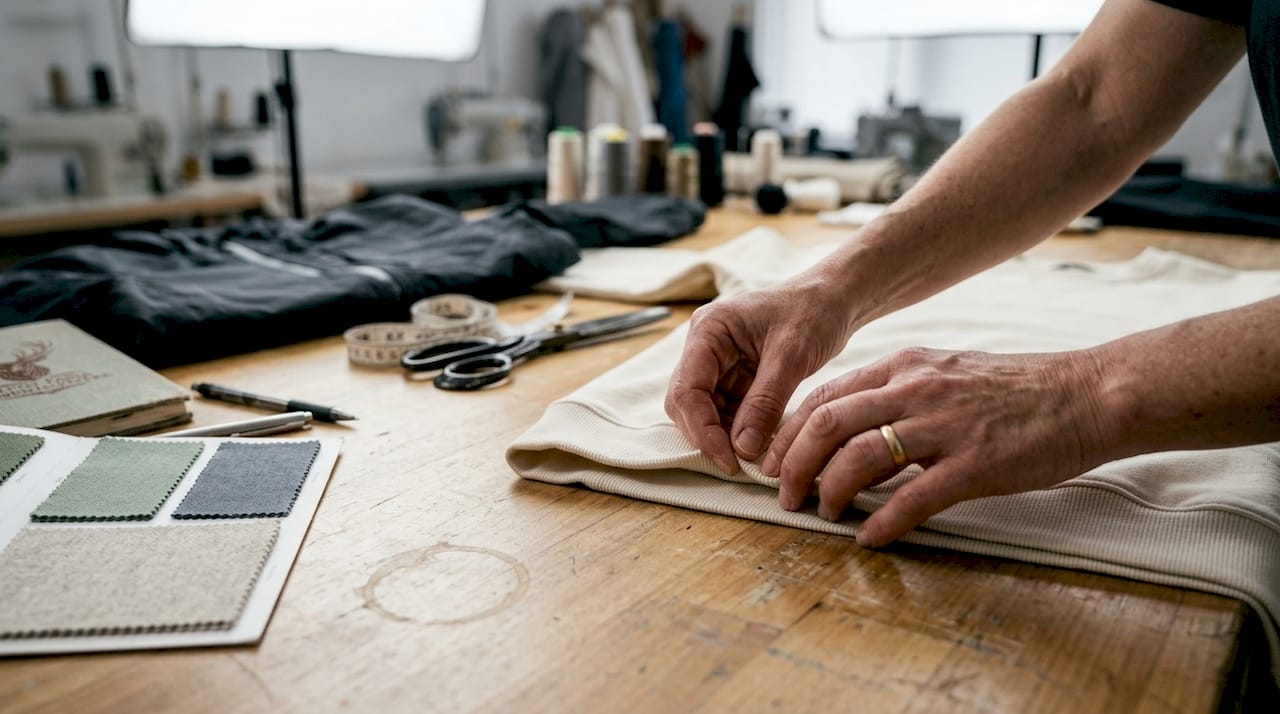
Here is a breakdown of the key technical properties that define quality minimalist streetwear:
| Property | What to look for | Why it matters |
|---|---|---|
| Fabric weight | 300gsm to 400gsm for hoodies | Durability and structure |
| Construction | Reinforced stitching, flat seams | Longevity and comfort |
| Silhouette | Considered proportions, intentional fit | Visual impact without graphics |
| Colour palette | Neutral, consistent toning | Versatility and cohesion |
| Branding | Subtle, integrated, or symbolic | Meaning over noise |
Some brands also blend elements from adjacent categories. Oversized proportions from workwear, technical fabrics from performance sportswear, and symbolic detailing from tattoo art all appear in contemporary minimalist streetwear. These hybrid approaches create pieces with genuine edge without abandoning the core principle of restraint.
Key features to assess when evaluating a minimalist streetwear piece:
- Fabric composition and weight
- Seam quality and finishing
- Fit consistency across sizes
- Symbolic or philosophical detail in branding
- Versatility across casual and semi-formal settings
Pro Tip: When building a minimalist wardrobe, handle the fabric before purchasing where possible. Weight, texture, and drape communicate quality more reliably than any brand description. If you are shopping online, check the hoodie technical details listed by the brand carefully before committing.
The difference between a meaningful minimalist piece and a forgettable basic often comes down to these technical decisions. Brands that invest in construction and intentional design produce garments that last, both physically and culturally.
Market growth and sustainability: The global impact of minimalist streetwear
Understanding the technical and aesthetic elements, it is worth stepping back to examine the larger market forces and sustainability impacts shaping this category.
The numbers are significant. The streetwear market exceeds $187 billion globally, with 70% of consumers under 25 and 60% of brands committing to sustainability practices. These figures reflect a structural shift in how young people engage with fashion, not a passing trend.
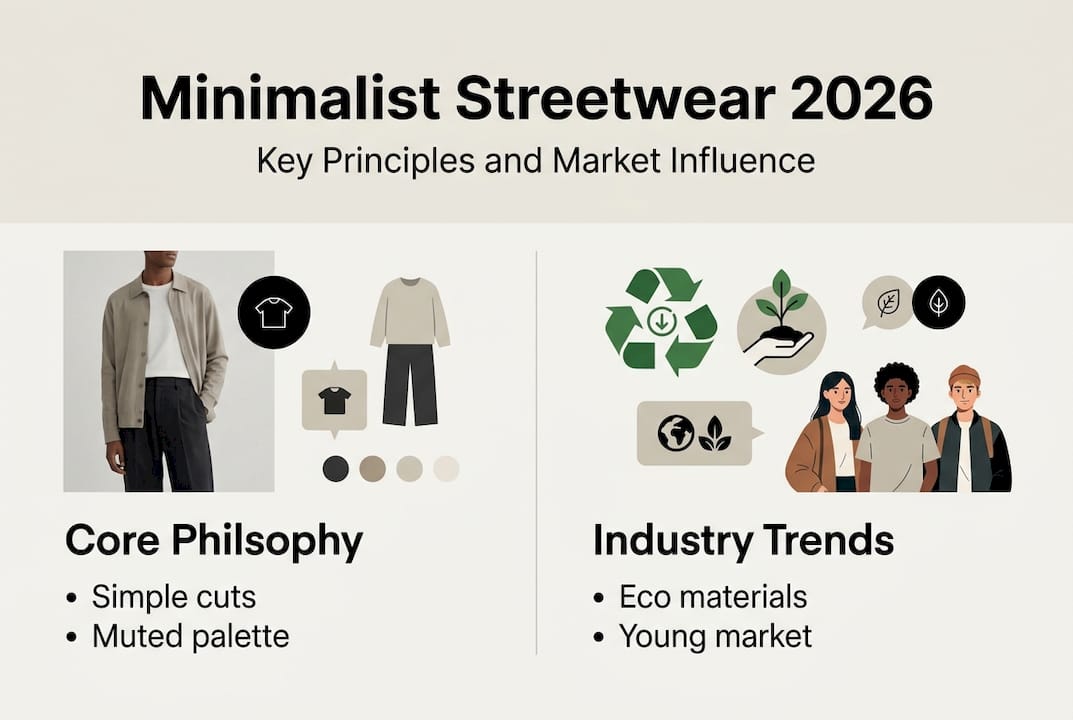
Minimalist streetwear sits at the centre of that shift. Its emphasis on fewer, better pieces aligns directly with growing consumer demand for sustainable options.
| Factor | Traditional streetwear | Minimalist streetwear |
|---|---|---|
| Branding | Bold logos, heavy graphics | Subtle, symbolic, or absent |
| Production | High volume, seasonal drops | Limited runs, considered releases |
| Demographics | Broad youth market | Conscious urban consumers |
| Sustainability | Variable commitment | Core brand value |
| Longevity | Trend-dependent | Timeless by design |
“Sustainability is no longer a differentiator in streetwear. It is becoming the baseline expectation for brands targeting urban youth.”
The rise of recycled materials is a key marker of this shift. Items such as recycled sports bras and other pieces made from post-consumer materials are appearing across minimalist collections. Micro-branding, where logos are small, symbolic, or entirely absent, is also growing as consumers reject the status signalling of earlier streetwear eras.
Three steps brands typically take to increase sustainability focus:
- Material sourcing: Shifting to organic cotton, recycled polyester, or other low-impact fabrics.
- Production volume: Reducing overproduction through limited or made-to-order runs.
- Transparency: Publishing supply chain information so consumers can verify claims.
These steps reflect a broader maturation of the streetwear market. Brands that ignore sustainability are increasingly out of step with the values of their core demographic.
How to build a meaningful minimalist streetwear wardrobe
With the global trends and sustainability context clear, the practical question remains: how does someone actually build a wardrobe that reflects these values without starting from scratch or spending excessively?
The answer is deliberate curation. A minimalist streetwear wardrobe is not built quickly. It is assembled over time, with each addition considered against what is already there.
Step-by-step guide to building a minimalist streetwear wardrobe:
- Audit what you own: Remove anything that does not fit well, does not reflect your values, or has not been worn in six months.
- Identify gaps: Note what functional categories are missing, outerwear, base layers, footwear.
- Set a colour palette: Choose two to three neutral tones that work together across all pieces.
- Prioritise quality over quantity: One well-made hoodie outperforms three mediocre ones in every practical measure.
- Add meaning: Seek pieces that carry a philosophy, a symbol, or a perspective you genuinely hold.
- Resist impulse purchases: If a piece does not serve multiple purposes, it does not belong in a minimalist wardrobe.
Brands leading minimalist trends in 2026 include Fear of God Essentials, The Row, Jil Sander, and several Japanese labels. Each prioritises construction, restraint, and considered design over seasonal novelty.
Recommended brands and influences for 2026:
- Fear of God Essentials: Oversized proportions, muted palettes
- The Row: Precision tailoring, luxury minimalism
- Jil Sander: Structural silhouettes, neutral tones
- Japanese labels: Wabi-sabi philosophy, deconstructed forms
- Memento Vivere: Symbolic minimalism, stoic philosophy
Pro Tip: Resist the pull of seasonal drops. A white minimalist hoodie in a quality fabric will serve you across years and contexts. The same applies to youth minimalist wardrobe staples. Timeless pieces always outperform trend-driven ones over any meaningful timeframe. When in doubt, choose black minimalist streetwear as a foundation. It works with everything.
Why minimalist streetwear is urban resilience with substance
Having covered both practical and market perspectives, it is worth reflecting on what minimalist streetwear actually means for youth culture beyond the commercial framing.
Hype culture is loud. It rewards novelty, exclusivity, and spectacle. Minimalist streetwear is the opposite. It rewards patience, discernment, and consistency. That contrast is not incidental. It reflects a genuine philosophical divide in how young people choose to present themselves in urban environments.
Minimalist streetwear enables resilient self-expression for urban youth precisely because it does not rely on external validation. A piece that carries meaning for the wearer does not need a crowd to confirm its value. That independence is rare in contemporary fashion culture.
The contrarian truth is this: substance outlasts hype every time. Trends cycle. Logos fade in cultural relevance. But a garment built on genuine quality and a clear philosophy remains relevant regardless of what the market does next. Urban youth who understand this are not just making better purchasing decisions. They are developing a more durable relationship with their own identity.
Explore signature minimalist streetwear pieces
If the substance and philosophy behind minimalist streetwear resonate, there are thoughtfully designed options available that reflect these principles directly.

Memento Vivere produces pieces built on intentional design, symbolic detail, and quality construction. The signature black hoodie and signature white hoodie are core wardrobe staples designed for longevity and meaning. The signature skater dress extends the minimalist philosophy into a versatile silhouette suited to urban settings. Each piece carries the brand’s central message: everything passes, remember to live. These are not trend pieces. They are designed to remain relevant across seasons and contexts.
Frequently asked questions
What makes minimalist streetwear different from regular basics?
Minimalist streetwear involves nuanced technical design, intentional branding, and a philosophy rooted in quality and self-expression. Regular basics prioritise price and convenience over construction and meaning.
Why is minimalist streetwear popular among urban youth?
It reflects resilience and self-expression through conscious, sustainable choices and directly counters fast fashion culture, which many urban young adults are actively rejecting.
Which brands are leading minimalist streetwear trends in 2026?
Brands leading in 2026 include Fear of God Essentials, The Row, Jil Sander, and Japanese minimalist labels, each prioritising construction and restraint over seasonal novelty.
Is minimalist streetwear more sustainable than typical streetwear?
Generally yes. Many minimalist brands are committed to recycled materials and reduced production volumes, with 60% of streetwear brands now committing to sustainability practices across their supply chains.