
Tattoo-inspired art: Styles and meaning for mindful design
Choosing tattoo-inspired art for clothing is not straightforward. The range of styles is broad, the symbolism runs deep, and the difference between a design that feels genuinely meaningful and one that simply looks decorative is significant. Tattoo traditions carry centuries of cultural weight, and when those traditions transfer to fabric and print, the best results come from deliberate selection. This guide covers the key styles, motifs, and criteria that matter most for anyone seeking clothing that reflects resilience, mindfulness, and personal philosophy. Whether the interest lies in clean geometric lines or bold philosophical statements, the following sections provide a clear framework for making informed choices.
Table of Contents
- How to choose tattoo-inspired art for meaningful design
- Minimalist and geometric tattoo styles: Clean lines and symbolism
- Philosophical and conceptual designs: Quotes and symbols for mindfulness
- Traditional and bold motifs: Tribal, blackwork, and fine line adaptations
- Innovative applications: Technology transfers and edge cases
- Why tattoo-inspired art resonates: Beyond trends and rebellion
- Shop meaningful tattoo-inspired designs for mindful living
- Frequently asked questions
Key Takeaways
| Point | Details |
|---|---|
| Selection criteria matter | Choosing tattoo-inspired art starts with clarifying the meanings, techniques, and motifs that resonate with your values. |
| Minimalism offers depth | Minimalist and geometric styles use precision and negative space to communicate balance and resilience through subtle design. |
| Philosophy in fashion | Quotes, symbols, and sacred geometry transform wearable art into reminders of mindfulness and life’s purpose. |
| Tradition meets innovation | Traditional motifs and modern technology expand tattoo-inspired art from rebellious roots to mainstream fashion and tech. |
| Durability influences choice | Apparel prints inspired by tattoos provide aesthetic longevity that actual ink sometimes lacks, especially in fine line styles. |
How to choose tattoo-inspired art for meaningful design
Selecting tattoo-inspired art for clothing starts with purpose. A design without clear intent tends to feel generic over time. The most enduring pieces carry a specific meaning for the wearer, whether that is resilience through difficulty, a commitment to mindfulness, or a philosophical principle worth carrying daily.
Tattoo-inspired art adapts traditional tattoo styles including geometric, fine line, dotwork, minimalist linework, and blackwork to non-skin mediums such as clothing prints and graphic design. Each style carries distinct visual characteristics and symbolic associations, so understanding the differences helps narrow down what fits a particular philosophy or aesthetic.
Key criteria to consider when selecting tattoo-inspired art for clothing:
- Symbolic intent: Define what the design should represent. Resilience, balance, impermanence, and mindfulness are common themes. A motif chosen without this clarity rarely holds long-term significance.
- Style category: Minimalist, geometric, fine line, dotwork, and blackwork each produce different visual effects. Minimalist and fine line styles suit those who prefer subtle statements. Blackwork and dotwork create stronger visual impact.
- Production method: Screen printing, embroidery, and appliqué each affect how a design looks and wears over time. Embroidery adds texture and durability. Screen printing allows for fine detail at scale.
- Philosophical references: Designs incorporating sacred geometry, Stoic philosophy, or symbols like Memento Mori (a Latin phrase meaning “remember you will die,” used as a reminder to live fully) carry interpretive depth beyond surface aesthetics.
Pro Tip: Before selecting a design, write down one sentence describing what it should mean to you. If the design cannot be connected to that sentence, it is worth reconsidering.
For those seeking a practical starting point, the signature skater dress from Memento Vivere demonstrates how minimalist tattoo-inspired art translates into everyday clothing with clear symbolic intent.
The selection process benefits from patience. Rushing toward a visually appealing design without considering its meaning or production quality often results in clothing that feels hollow after a few wears. Treating the selection criteria as a checklist rather than a suggestion leads to more consistent and satisfying outcomes.
Minimalist and geometric tattoo styles: Clean lines and symbolism
Minimalist and geometric tattoo styles emphasise clean lines, single-needle techniques, and symbolic shapes representing harmony, balance, and resilience. These styles have become particularly well-suited to clothing because their precision translates effectively to print and embroidery without losing visual clarity.

The defining characteristic of minimalist tattoo-inspired art is restraint. Less ink, fewer elements, and deliberate use of negative space (the empty areas around a design that give it room to breathe and add meaning) produce designs that communicate quietly but clearly. This suits clothing intended as a daily reminder rather than a loud statement.
Common motifs in this category include:
- Single-line geometric shapes: Circles, triangles, and hexagons representing cycles, strength, and interconnection.
- Kintsugi-inspired patterns: Kintsugi is the Japanese art of repairing broken objects with gold, symbolising that damage is part of an object’s history rather than a flaw. In tattoo-inspired art, this appears as fractured lines filled with gold or light.
- Yin-yang adaptations: Representing balance between opposing forces, often rendered in fine line or dotwork.
- Sacred geometry: Repeating mathematical patterns found in nature, used to represent order and universal principles.
| Style | Visual effect | Best production method | Symbolic association |
|---|---|---|---|
| Minimalist linework | Subtle, precise | Fine screen print | Clarity, purpose |
| Geometric shapes | Structured, bold | Screen print or embroidery | Balance, order |
| Dotwork | Textured, layered | Digital print | Depth, patience |
| Fine line | Delicate, detailed | High-resolution digital print | Sensitivity, nuance |
Pro Tip: Geometric designs with strong contrast between line and background tend to hold their visual quality longer on fabric than highly detailed fine line prints, which can soften slightly after repeated washing.
Minimalist tattoo-inspired clothing works particularly well for those who want their values visible without being obvious. The design communicates to those who look closely, rather than demanding attention from across the room.
Philosophical and conceptual designs: Quotes and symbols for mindfulness
Beyond shapes and lines, deeper concepts come alive through philosophical tattoo-inspired designs. These pieces incorporate language, symbols, and conceptual references that connect directly to personal philosophy and mindful living.
Philosophical tattoo-inspired designs incorporate quotes from thinkers like Nietzsche and Plato, sacred geometry, surrealism, and symbols like Memento Mori for mindfulness and life’s purpose. When adapted to clothing, these references become portable reminders of values the wearer has chosen to carry.
Common approaches in this category:
- Philosophical quotes: Short phrases from Stoic, Buddhist, or existentialist traditions. Brevity matters here. A single line carries more weight than a paragraph.
- Memento Mori symbolism: Skulls, hourglasses, and wilting flowers representing the passage of time and the importance of living fully in the present.
- Impermanence motifs: Cherry blossoms, cracked surfaces, and dissolving forms referencing the Buddhist concept of impermanence, the idea that nothing is permanent and that accepting this brings clarity.
- Surrealist imagery: Unexpected combinations of recognisable objects that challenge assumptions and prompt reflection.
“The obstacle is the way.” Marcus Aurelius. This principle, central to Stoic philosophy, appears frequently in tattoo-inspired fashion as both direct text and abstract visual metaphor.
Philosophical designs work best when the reference is personally understood rather than aesthetically borrowed. A Memento Mori symbol worn by someone who has genuinely reflected on mortality carries different weight than the same symbol chosen purely for its visual style. The clothing becomes a daily prompt for that reflection.
These designs also tend to age well. Philosophical concepts do not become outdated in the way that trend-driven graphics do. A well-executed Stoic quote or impermanence motif remains relevant regardless of what is currently popular in fashion.
Traditional and bold motifs: Tribal, blackwork, and fine line adaptations
In addition to minimalist and philosophical options, traditional tattoo-inspired motifs bring their own advantages and challenges to art and fashion. Tribal patterns, blackwork, and fine line adaptations each produce distinct visual effects and carry specific cultural and symbolic associations.
Tattoo-inspired fashion uses printing, embroidery, flocking, and appliqué to replicate motifs like phoenix with Kintsugi (resilience), yin-yang wolves (inner balance), and tribal patterns on tees and hoodies. These methods vary in durability and visual impact.
| Method | Durability | Visual impact | Best for |
|---|---|---|---|
| Screen printing | High | Strong, flat | Bold blackwork, tribal |
| Embroidery | Very high | Textured, raised | Logos, small motifs |
| Flocking | Medium | Velvet-like texture | Statement pieces |
| Digital print | High | Fine detail | Complex, multi-element designs |
Key considerations for traditional and bold motifs:
- Tribal patterns carry cultural heritage from Polynesian, Maori, and Indigenous traditions. Using these respectfully requires understanding their origin rather than treating them as purely decorative.
- Blackwork uses solid black ink or print to create high-contrast designs. On clothing, this translates to strong visual statements that hold detail well across washes.
- Phoenix motifs represent renewal and resilience, making them a natural fit for clothing with philosophical intent.
- Fine line adaptations on apparel require high-resolution digital printing. Fine line tattoos age faster due to less ink saturation, but apparel prints using durable inks avoid this fading issue.
Bold motifs suit those who want their clothing to make an immediate visual statement. Traditional tattoo-inspired designs in this category tend to carry strong cultural narratives, which adds depth when the wearer understands and connects with that narrative.
Innovative applications: Technology transfers and edge cases
Finally, look beyond typical clothing. Tattoo-inspired art has expanded well beyond fabric into technology and experimental applications, demonstrating the adaptability of these design traditions.
Methodologies include screen printing, embroidery, and digital prints for scalability, with edge cases like temporary tattoos for electronics transfer highlighting adaptability beyond apparel to conformable tech. This research area explores how tattoo-inspired conductive patterns can be applied directly to skin or flexible surfaces for functional electronic purposes.
Key developments and applications in this space:
- Temporary tattoos for electronics: Conductive ink patterns applied to skin or flexible substrates that function as sensors, antennas, or input devices.
- Digital print scalability: High-resolution digital printing allows intricate tattoo-inspired designs to be reproduced consistently across large production runs without loss of detail.
- Mainstream adoption: Tattoo-inspired art has moved from subcultural rebellion to mainstream fashion, appearing in major retail collections and independent brands alike.
- Customisation potential: Digital methods allow individuals to commission or design personalised tattoo-inspired graphics for clothing, accessories, and technology cases.
The movement from rebellion to mainstream has not diluted the symbolic value of tattoo-inspired art. It has instead made these visual languages accessible to a broader audience. The designs that carry genuine meaning continue to stand apart from those adopted purely for trend value, regardless of how widely the aesthetic spreads.
The future potential for tattoo-inspired design extends into wearable technology, interactive textiles, and personalised production. As digital manufacturing becomes more accessible, the gap between a custom tattoo design and a custom clothing print continues to narrow.
Why tattoo-inspired art resonates: Beyond trends and rebellion
Tattoo-inspired art’s journey into mainstream fashion is often framed as a loss of edge. That framing misses the point. The shift from rebellion to mainstream reflects a genuine cultural evolution in how people relate to symbolism, identity, and self-expression through clothing.
What actually matters is not whether a style is subcultural or mainstream. What matters is whether the wearer has a genuine relationship with the meaning behind the design. A minimalist geometric print chosen because it represents a personal philosophy carries more weight than a bold tribal pattern chosen because it looked striking on a website.
The practical implication is straightforward. When selecting tattoo-inspired clothing, the question worth asking is not “does this look good” but “does this mean something to me.” Designs chosen on that basis tend to remain relevant in a personal wardrobe far longer than trend-driven selections.
Authenticity in tattoo-inspired fashion does not require exclusivity or obscurity. It requires honest engagement with the symbolism being worn. That standard applies equally to a minimalist fine line print and a bold blackwork hoodie.
Shop meaningful tattoo-inspired designs for mindful living
Understanding the range of tattoo-inspired styles and their symbolic depth makes it easier to identify clothing that genuinely reflects personal values. Memento Vivere offers a curated selection of pieces designed around these principles.
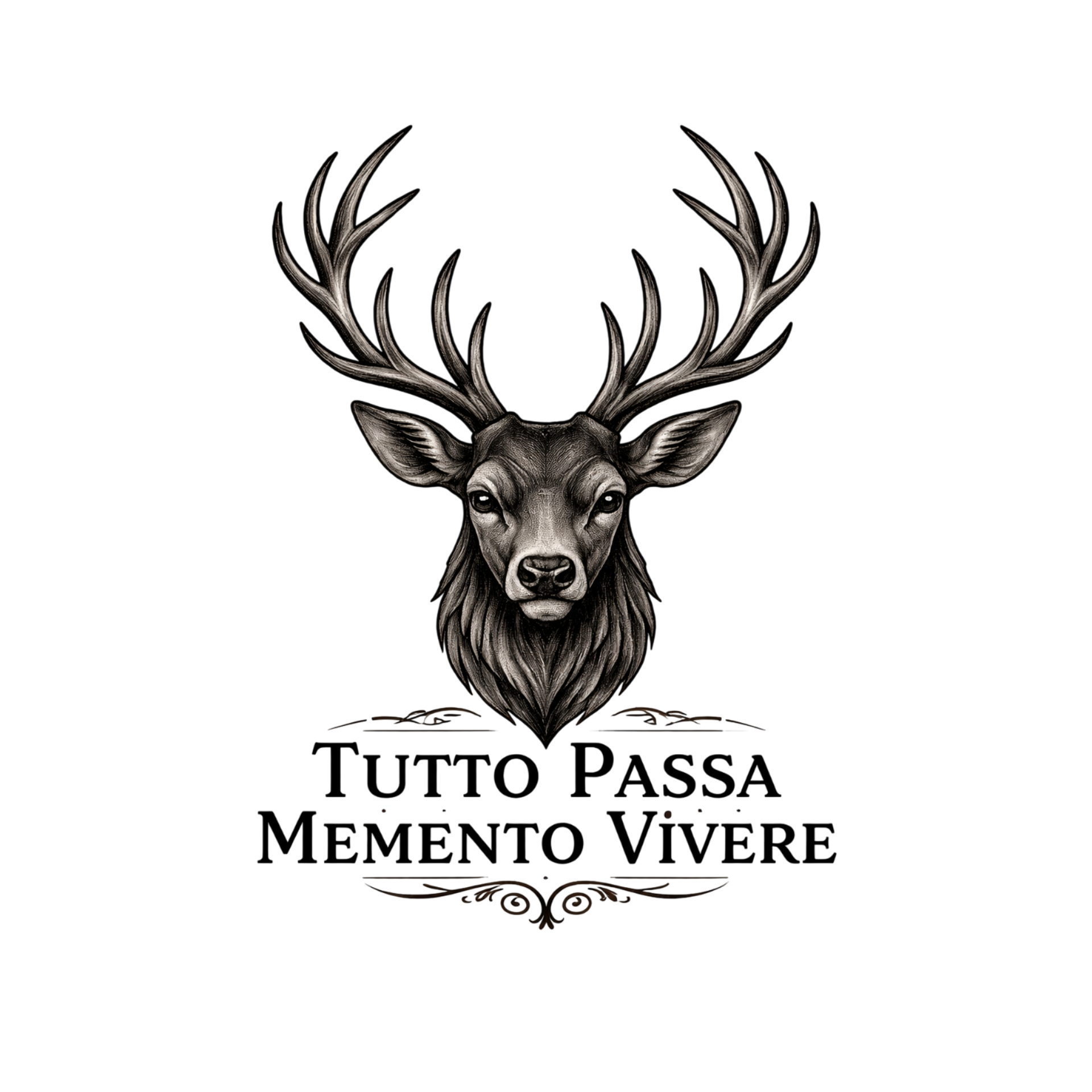
The signature black hoodie features the “Tutto Passa, Memento Vivere” philosophy rendered in tattoo-inspired minimalist design. The signature skater dress applies the same symbolic framework in a different silhouette. Both pieces are built around the brand’s central stag motif, representing resilience, renewal, and awareness. To browse the full range of clothing and accessories designed for mindful living, discover mindful clothing at Memento Vivere.
Frequently asked questions
What motifs are commonly used in tattoo-inspired art for clothing?
Popular motifs include geometric shapes, minimalist linework, philosophical quotes, tribal patterns, and symbolic imagery such as phoenix or yin-yang, applied through printing, embroidery, and appliqué techniques.
How do minimalist tattoo-inspired designs add philosophical depth?
Minimalist styles use precise lines, negative space, and symbolic shapes to represent harmony, balance, and resilience, often incorporating philosophical symbols such as Memento Mori or sacred geometry for mindfulness.
Are tattoo-inspired apparel prints as durable as tattoos on skin?
Durable apparel prints mimic tattoo aesthetics effectively and avoid the fading issues associated with fine line tattoos, which age faster due to lower ink saturation on skin.
Can tattoo-inspired art be adapted to technology beyond fashion?
Yes. Temporary tattoos for electronics and digital print methods demonstrate how tattoo-inspired art extends beyond clothing into conformable tech and wearable electronic applications.