
What is conscious clothing? A guide to mindful fashion
Most people assume conscious clothing simply means eco-friendly fabric or trendy sustainable labels. That surface understanding misses the deeper philosophy woven into every thread. Conscious clothing embodies mindfulness, personal growth, and social responsibility, transforming how you dress into an intentional act of resilience and awareness. For urban individuals seeking meaningful fashion, especially within streetwear culture, this approach offers more than style. It provides a framework for living with purpose. This guide explores the values, materials, and design principles that define conscious clothing, revealing how philosophical ideas shape modern minimalist fashion and empower you to dress with intention.
Table of Contents
Key takeaways
| Point | Details |
|---|---|
| Conscious clothing definition | Integrates sustainability, mindfulness, and social awareness into every garment, reflecting personal values beyond aesthetics |
| Minimalist principles | Subtle elegance and functional design reduce excess whilst supporting mental clarity and thoughtful consumption |
| Sustainable materials | Recycled fibres and organic cotton cut carbon emissions by up to 70% compared to virgin materials |
| Streetwear evolution | Urban fashion increasingly adopts ethical production and philosophical design elements for socially aware consumers |
| Spiritual design | Clothing incorporates symbols and messages that remind wearers of resilience, presence, and deeper meaning |
What is conscious clothing? Defining mindful fashion
Conscious clothing represents far more than a trend or marketing label. It integrates social, ecological, and energetic awareness into every aspect of apparel, transforming garments into expressions of lifestyle values. This philosophy demands attention to ecological materials, ethical labour practices, and mindful design that honours both maker and wearer.
The concept connects directly to personal growth and resilience. When you choose conscious clothing, you select pieces that support higher consciousness through intentional creation. Each garment becomes a reminder of your commitment to responsibility and awareness. Urban individuals seeking meaning in fashion find this approach particularly resonant because it aligns style with substance.
Key aspects define conscious clothing beyond surface features:
-
Materials sourced with minimal environmental harm
-
Production processes ensuring fair wages and safe conditions
-
Designs incorporating spiritual or philosophical elements
-
Longevity prioritised over disposable trends
-
Transparency throughout supply chains
Brands like Memento Vivere Co exemplify this philosophy by embedding stoic principles and timeless symbolism into minimalist designs. The stag symbol, representing strength and renewal, transforms clothing into wearable philosophy. This approach resonates with those who view fashion as an extension of identity rather than mere decoration.
“Conscious clothing asks you to consider not just what you wear, but why you wear it and who made it possible.”
The distinction matters because fast fashion has conditioned consumers to prioritise quantity and novelty. Conscious clothing reverses that conditioning, encouraging fewer purchases of higher quality items that carry genuine meaning. For streetwear enthusiasts, this shift doesn’t mean sacrificing edge or individuality. It means expressing those qualities through pieces that reflect deeper values and awareness.
Recognising conscious clothing requires looking beyond labels to understand production stories, material origins, and design intentions. This knowledge empowers you to build a wardrobe that supports both personal style and collective wellbeing.
Minimalist fashion and mindfulness in conscious clothing
Minimalist fashion serves as the aesthetic foundation for conscious clothing principles. By reducing excess and focusing on meaningful design, this approach emphasises simplicity and functionality, creating space for intentional living. The philosophy aligns perfectly with sustainable consumption by encouraging fewer, better items that serve multiple purposes.
Collections such as Underplay and Understated embody subtle elegance through understated motifs and refined simplicity. These designs prove that minimalism doesn’t mean boring. Instead, it creates visual calm that allows philosophical elements to shine without overwhelming the wearer. Streetwear culture has embraced this shift, blending urban edge with mindful restraint.
The mental benefits extend beyond wardrobe organisation. Minimalist style supports clarity by eliminating decision fatigue and visual noise. When your clothing choices reflect intentional values rather than impulse, you create psychological space for what truly matters. This resilience building through simplicity resonates deeply with those navigating urban complexity.
Practical applications of minimalist conscious fashion include:
-
Capsule wardrobes built around versatile core pieces
-
Neutral colour palettes allowing endless combinations
-
Quality construction ensuring years of wear
-
Timeless silhouettes transcending seasonal trends
The connection between minimalism and mindfulness becomes clear when you consider how clothing affects daily experience. Pieces from brands offering eco-friendly fabrics demonstrate that sustainable choices need not compromise style or comfort. Recycled materials and organic fibres provide the foundation for garments that feel good whilst doing good.
Pro Tip: Curate your conscious wardrobe by selecting pieces that serve at least three different styling contexts. A quality hoodie should work for casual outings, layering, and solo statement wear. This versatility maximises value whilst minimising consumption.
Minimalist conscious clothing challenges the notion that more options equal more freedom. True freedom emerges when every item in your wardrobe aligns with your values and serves your lifestyle authentically. The simplicity creates space for presence, allowing you to focus energy on living rather than managing possessions. For urban individuals balancing multiple demands, this approach offers practical wisdom wrapped in elegant design.
Sustainability and ethics: materials and production in conscious clothing
Sustainable materials form the backbone of conscious clothing, with specific fabrics offering dramatically different environmental impacts. Organic cotton, recycled polyester, and natural fibres like hemp and linen dominate ethical production. The choice matters because recycled materials reduce carbon emissions by up to 70% compared to virgin alternatives.

Ethical production extends beyond materials to encompass labour practices. Fair wages, safe working conditions, and supply chain transparency define truly conscious brands focused on social responsibility. These standards protect workers whilst ensuring quality craftsmanship that extends garment lifespan. The impact ripples through communities, supporting local economies and dignified employment.
Consumer demand drives this transformation. As awareness grows, brands face pressure to prove sustainability claims through certifications and transparent reporting. This accountability shift empowers conscious consumers to make informed choices that align purchases with values.
| Material | Carbon footprint | Water usage | Durability | Biodegradability |
|---|---|---|---|---|
| Organic cotton | Medium | High | Good | Excellent |
| Recycled polyester | Very low | Very low | Excellent | Poor |
| Virgin polyester | Very high | Low | Excellent | Poor |
| Hemp | Low | Very low | Excellent | Excellent |
| Conventional cotton | High | Very high | Good | Excellent |
The table reveals trade-offs inherent in material selection. Recycled polyester excels in carbon reduction but lacks biodegradability. Hemp offers exceptional sustainability across metrics but faces limited availability. Organic cotton balances environmental responsibility with natural decomposition, though water usage remains significant.
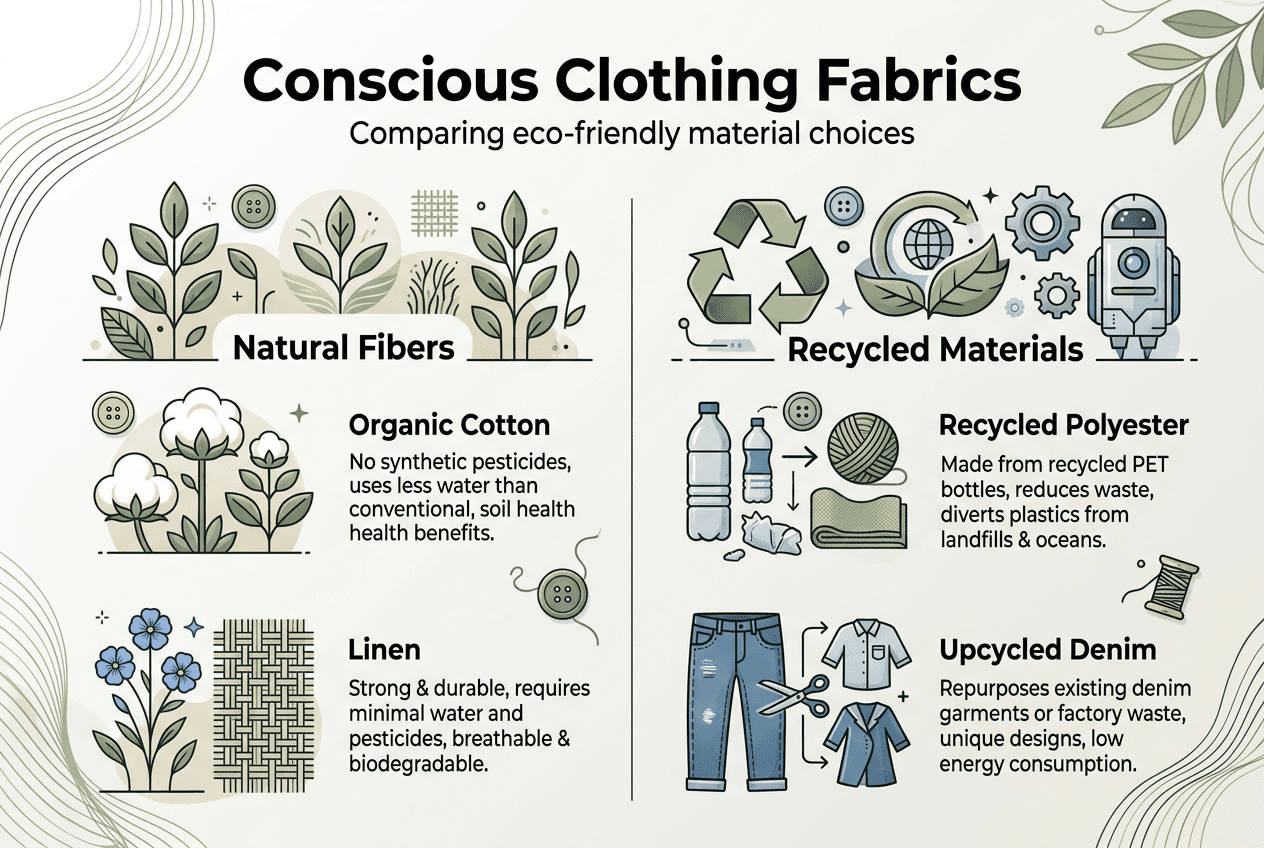
Brands incorporating recycled fabrics in activewear demonstrate practical applications of these principles. Performance clothing benefits particularly from recycled synthetics, which maintain technical properties whilst diverting waste from landfills. This innovation proves sustainability enhances rather than compromises functionality.
Pro Tip: Verify sustainability claims by checking for recognised certifications like GOTS for organic cotton, GRS for recycled content, or Fair Trade for ethical labour. Independent verification matters more than marketing language.
The circular fashion economy represents the future of conscious clothing, designing garments for longevity, repair, and eventual recycling. This systems thinking contrasts sharply with linear fast fashion models that extract, produce, and discard. Understanding these production realities empowers you to support brands genuinely committed to environmental and social responsibility.
Material transparency allows conscious consumers to trace garment origins from fibre to finished product. This visibility builds trust whilst holding brands accountable for sustainability promises. Research into sustainable fabrics reveals ongoing innovation in bio-based alternatives and closed-loop manufacturing processes that minimise waste.
Streetwear culture embracing conscious clothing
Streetwear culture undergoes a philosophical transformation as sustainable materials and ethical production appeal to socially aware audiences. This evolution challenges traditional streetwear’s consumption-driven roots, replacing hype cycles with intentional purchases. Urban youth and young adults increasingly demand fashion that reflects environmental and social consciousness without sacrificing edge or authenticity.
The shift manifests through organic cotton basics, recycled synthetic blends, and fair labour commitments from emerging brands. Design elements incorporate mindful philosophies through symbolic imagery, stoic quotes, and nature-inspired motifs. These features transform streetwear from pure aesthetic expression into wearable reminders of resilience and awareness.
| Feature | Traditional streetwear | Conscious streetwear |
|---|---|---|
| Materials | Conventional cotton, virgin synthetics | Organic cotton, recycled fibres |
| Production | Mass manufacturing, unclear origins | Ethical labour, transparent supply chains |
| Design focus | Logos, branding, trends | Philosophical symbols, timeless aesthetics |
| Consumption model | Seasonal drops, hype cycles | Quality investment, longevity |
| Values expressed | Status, affiliation | Mindfulness, responsibility |
The comparison reveals fundamental differences in approach and intention. Conscious streetwear maintains urban credibility whilst embedding deeper meaning into every piece. Brands like Memento Vivere Co exemplify this balance, combining tattoo-style art with minimalist design and philosophical messaging that resonates with purpose-driven consumers.
Benefits extend beyond personal satisfaction to collective impact. When streetwear embraces sustainability, it influences broader fashion culture through its trendsetting position. Young consumers who prioritise conscious choices drive market transformation, forcing larger brands to adopt ethical practices or risk irrelevance.
Key attributes distinguishing conscious streetwear include:
-
Durable construction designed for years of wear
-
Versatile pieces transcending seasonal trends
-
Symbolic elements encouraging reflection and presence
-
Transparent communication about materials and production
-
Community building around shared values rather than exclusivity
This movement empowers urban individuals to express identity through fashion that aligns with personal philosophy. Wearing clothing that embodies resilience and awareness becomes an act of intentional living. The stag symbol, representing strength and renewal, appears frequently in conscious streetwear as a reminder to move forward through life’s changing seasons.
Research into streetwear sustainability trends shows accelerating adoption among younger demographics who view environmental responsibility as non-negotiable. This generational shift promises lasting transformation in fashion culture, replacing disposable consumption with mindful curation. Conscious streetwear proves that style and substance need not compete but can amplify each other when rooted in authentic values.
Explore conscious fashion with Memento Vivere Co
If the principles explored here resonate with your approach to fashion and life, consider experiencing them through carefully designed pieces that embody conscious clothing ideals. The black tutto passa hoodie combines minimalist aesthetics with the stoic reminder that everything passes, encouraging presence in each moment.

For those seeking versatile conscious pieces, the signature skater dress demonstrates how philosophical design translates into wearable art. Each garment from Memento Vivere Co reflects ethical production and meaningful symbolism, transforming your wardrobe into a daily practice of intentional living. Explore collections that honour both style and substance, designed for urban individuals who view fashion as an extension of personal philosophy rather than fleeting trends.
What is conscious clothing? Common questions answered
How does conscious clothing differ from fast fashion?
Conscious clothing prioritises quality, longevity, and ethical production, whilst fast fashion focuses on rapid trend cycles and disposable consumption. Fast fashion relies on cheap labour and environmentally harmful materials to maximise profit margins. Conscious brands invest in sustainable materials, fair wages, and transparent supply chains that support both people and planet.
How can I identify truly sustainable clothing brands?
Look for recognised certifications like GOTS, Fair Trade, or GRS that verify sustainability claims through independent auditing. Genuine brands provide detailed information about material sources, production locations, and labour practices. Avoid vague marketing language without specific evidence or third-party validation.
Can I build a conscious wardrobe on a limited budget?
Start by purchasing fewer, higher quality pieces that serve multiple purposes and last longer than cheap alternatives. Secondhand shopping offers conscious options at reduced prices whilst extending garment lifecycles. Focus on versatile basics in neutral colours that create numerous outfit combinations, reducing the need for constant purchases.
What role do spiritual and philosophical design elements play?
Symbolic imagery and meaningful messages transform clothing into daily reminders of personal values and intentions. Philosophical elements encourage mindfulness and presence, connecting fashion to deeper aspects of identity. These designs appeal to those seeking clothing that reflects inner beliefs rather than external trends.
How does proper clothing care support sustainability?
Washing garments less frequently, using cold water, and air drying extends lifespan whilst reducing energy consumption. Prompt repairs prevent minor damage from becoming disposal triggers, maximising the value of each purchase. Proper care ensures conscious clothing investments deliver years of wear, justifying higher initial costs through extended use.