
Purpose-driven clothing: a guide to mindful style
TL;DR:
- True purpose-driven clothing reflects verifiable values like transparency, durability, and ethical production.
- Design methods such as ecodesign and supply chain transparency ensure garments align with purpose.
- Building an intentional wardrobe focuses on quality, emotional attachment, and mindful consumer choices.
Purpose-driven clothing is a term used widely across the fashion industry, yet its meaning is frequently misunderstood. Many brands apply the label to signal eco-conscious intent, but the reality is more specific. True purpose-driven clothing connects design, materials, and values in a way that is verifiable and lasting. It draws on philosophy, practical design standards, and genuine transparency. This guide explains what purpose-driven clothing actually means, how to identify it, and how to build a wardrobe that reflects values such as resilience, mindfulness, and intentional living.
Table of Contents
- Defining purpose-driven clothing: more than marketing
- How purpose-driven methodology changes clothing design
- Transparency, traceability, and the challenge of authenticity
- Resilience, minimalism, and mindfulness: living your values through clothing
- Why purpose in clothing must mean action, not aspiration
- Explore meaningful clothing for your mindful journey
- Frequently asked questions
Key Takeaways
| Point | Details |
|---|---|
| Go beyond the label | Purpose-driven clothing demands verifiable action and full transparency, not just eco-marketing claims. |
| Design meets values | Real purpose is built into clothing through mindful design, durable materials, and extensive life-cycle consideration. |
| Authentic brands educate | Brands leading with purpose help consumers understand, repair, and cherish the garments they buy. |
| Mindfulness guides choices | Your wardrobe becomes powerful when you invest in quality, emotional attachment, and minimalism. |
Defining purpose-driven clothing: more than marketing
Purpose-driven clothing refers to garments designed and produced in alignment with clear, stated values. These values typically include resilience, mindfulness, ethical production, and long-term usability. The concept goes beyond attaching an eco-friendly label to a product. It requires that every decision, from material sourcing to packaging, reflects those stated values in a measurable way.
The distinction matters because purpose-driven is often used as marketing rhetoric. True implementation requires verifiable transparency, not superficial claims. A brand that states it values sustainability but provides no evidence of supply chain standards is using purpose as a positioning tool rather than a guiding principle.
What separates genuine purpose-driven clothing from standard sustainable fashion?
- Transparency: Brands publish verifiable data on materials, production locations, and environmental impact.
- Emotional durability: Garments are designed to form personal attachment, encouraging longer use.
- Measurable action: Claims are backed by certifications, audits, or third-party assessments.
- Philosophical alignment: Design choices reflect a coherent worldview, not just trend responses.
- Repairability: Products are made to be maintained and extended, not discarded.
A useful starting point is understanding the guide to conscious clothing, which outlines how mindful fashion differs from conventional retail.
“Purpose-driven clothing is not defined by what a brand says about itself. It is defined by what a brand can demonstrate through its practices, materials, and supply chain.”
Greenwashing remains a significant risk. Vague language such as “eco-conscious” or “sustainably inspired” without supporting evidence is a common tactic. Emotional durability, meaning the personal connection a wearer develops with a garment, is one of the most reliable indicators of genuine purpose. When clothing carries meaning, it is kept longer. That longevity is itself a sustainability outcome, as life-cycle assessment in clothing consistently shows.
How purpose-driven methodology changes clothing design
Translating philosophy into physical clothing requires structured tools and standards. The most widely used framework is ecodesign, a methodology that considers a garment’s full environmental impact from raw material extraction through to end of life.
Ecodesign integrates life-cycle assessment, material selection for durability, and multicriteria sustainability indexes into the design process. This means designers evaluate not just how a garment looks or performs, but how it will age, whether it can be repaired, and what happens when it is no longer wearable.

Multicriteria indexes assign ratings across several dimensions, including durability, recyclability, and resource efficiency. Some systems use an A to E scale, similar to energy labels on appliances. These ratings give consumers a clear, comparable measure of a product’s purpose alignment.
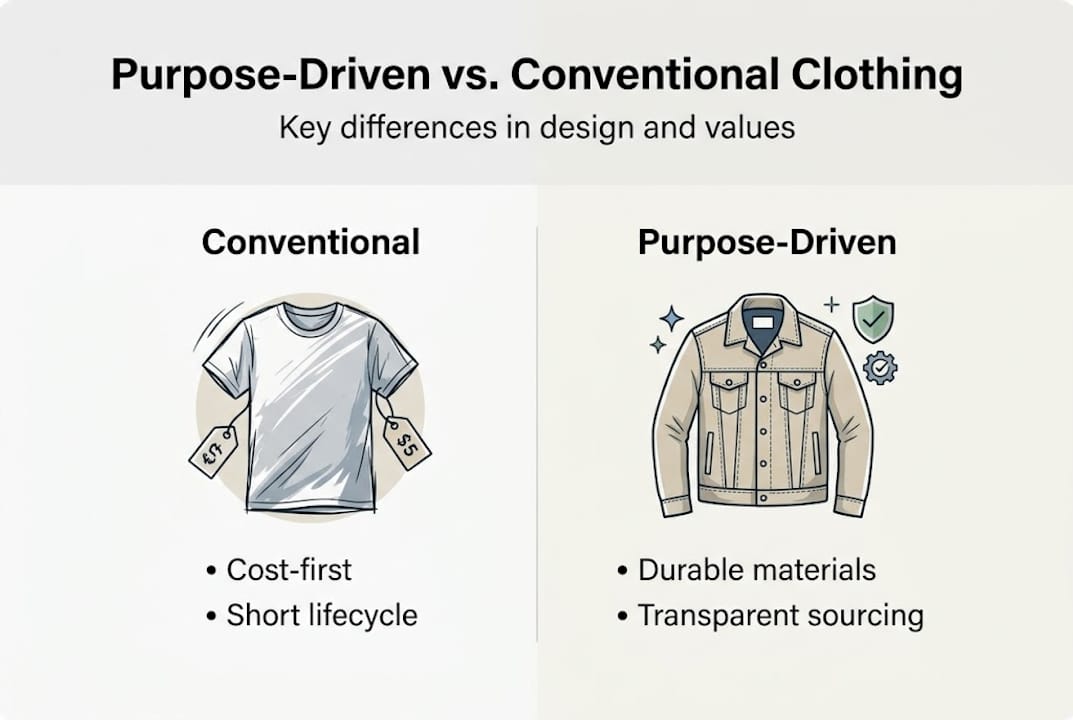
| Design factor | Conventional clothing | Purpose-driven clothing |
|---|---|---|
| Material selection | Cost-led | Durability and impact-led |
| Durability rating | Rarely assessed | Indexed and disclosed |
| Repairability | Not considered | Built into design |
| End-of-life plan | Landfill default | Recycling or circular return |
| Supply chain data | Limited | Verifiable and published |
Regulatory pressure is also shaping how brands approach design. The EU Strategy targets durable, recyclable textiles by 2030, requiring brands operating in European markets to meet minimum standards for product longevity and recyclability. The Ecodesign for Sustainable Products Regulation (ESPR) extends these requirements further, pushing brands to disclose product data digitally.
Pro Tip: When evaluating a clothing brand’s purpose credentials, look for a digital product passport or equivalent disclosure. This document summarises material composition, durability ratings, and end-of-life instructions in one place.
Brands that integrate these tools into their process demonstrate purpose through evidence rather than aspiration. Exploring mindful streetwear trends and minimalist fashion examples shows how some labels are already applying these standards in practice.
Transparency, traceability, and the challenge of authenticity
Transparency is the mechanism through which purpose-driven claims become credible. It is not enough for a brand to state its values. Those values must be traceable through the supply chain, from fibre origin to finished garment.
Traceability means providing proof points, not just claims. This includes naming suppliers, publishing audit results, and disclosing the percentage of recycled or certified materials used. Complex global supply chains hinder full transparency, and consumer education is needed for less frequent, more thoughtful buying decisions.
Common greenwashing tactics to watch for:
- Vague descriptors such as “eco-friendly” or “green” without supporting data
- Certifications that are self-issued or unverified by third parties
- Highlighting one sustainable element while ignoring broader supply chain issues
- Using natural imagery in marketing without evidence of environmental commitment
Some brands are setting a clearer standard. PAKA uses traceable alpaca fibres with direct farmer relationships. Prada has integrated recycled nylon (Re-Nylon) into core product lines. Stella McCartney operates a circular resale model that extends garment life beyond the original purchase. These are examples of authentic purpose in practice.
Emotional durability also plays a role in authenticity. When a garment carries philosophical meaning or personal significance, the wearer is less likely to discard it. This is not just a marketing concept. It is a measurable outcome. Clothing with strong personal association is kept for longer, reducing replacement frequency and overall consumption. Exploring philosophical apparel for mindful lives provides further context on how meaning extends garment life.
The challenge for consumers is developing the skills to distinguish genuine transparency from performative disclosure. Asking direct questions, reading supply chain reports, and cross-referencing certifications are practical steps.
Resilience, minimalism, and mindfulness: living your values through clothing
Choosing purpose-driven clothing is a practical decision as much as a philosophical one. It begins with identifying what values matter most and then selecting garments that reflect those values in material and design terms.
Building a more intentional wardrobe involves the following steps:
- Audit what you own: Identify which pieces you reach for consistently and which remain unworn. This reveals your actual preferences versus aspirational purchases.
- Define your criteria: Decide which values matter most, whether that is durability, ethical production, minimalist design, or philosophical meaning.
- Research before buying: Check material composition, brand transparency reports, and third-party certifications before committing to a purchase.
- Buy less, buy better: Consumer education supports less frequent, more considered buying as a key driver of wardrobe sustainability.
- Extend garment life: Learn basic repairs, follow care instructions precisely, and store garments correctly to maximise longevity.
- Build emotional attachment: Choose pieces with meaning. A garment that represents a value or memory is less likely to be discarded.
Emotional durability is a key factor in clothing longevity. When a garment carries personal significance, its useful life extends naturally.
Pro Tip: Treat each new clothing purchase as a long-term commitment. Ask whether you would still want to wear this piece in five years. If the answer is uncertain, reconsider the purchase.
Minimalism supports this approach by reducing the number of decisions required. A smaller wardrobe of high-quality, versatile pieces is easier to maintain and more aligned with intentional living. Brands advancing resilience in fashion demonstrate that fewer, better pieces are both commercially viable and environmentally sound. The minimalist style for mindful lives approach outlines practical methods for applying this thinking day to day.
Why purpose in clothing must mean action, not aspiration
The fashion industry has become skilled at framing aspiration as action. Brands publish sustainability roadmaps, use purpose-driven language in campaigns, and position themselves as agents of change. But aspiration without evidence is not purpose. It is positioning.
Regulations such as the ESPR and the EU Textile Strategy are beginning to enforce accountability. These frameworks require brands to move beyond voluntary commitments and meet defined standards. That is a meaningful shift. But regulation alone does not protect consumers from misleading claims in the short term.
The responsibility also sits with the individual. At the point of purchase, asking for evidence rather than accepting claims is a practical act of accountability. During a garment’s life, caring for it, repairing it, and using it fully is the most direct expression of purpose-driven values. Exploring minimalist streetwear and self-expression shows how this philosophy translates into everyday choices. Purpose in clothing is not a label. It is a standard that must be demonstrated continuously.
Explore meaningful clothing for your mindful journey
For those looking to apply these principles directly, Memento Vivere Co offers a focused range of pieces designed around stoic philosophy and minimalist values.
The Signature Backpack and Signature Drawstring bag are designed for daily use, built with simplicity and durability as primary criteria. Each piece carries the brand’s central philosophy: everything passes, so remember to live. Browse the full range of purposeful collections at Memento Vivere Co to find accessories and clothing that align with a minimalist, values-led lifestyle. These are not trend-driven products. They are functional items with clear design intent.
Frequently asked questions
How do I recognise truly purpose-driven clothing?
Look for brands that provide verifiable details about materials, genuine transparency in their supply chain, and demonstrate measurable sustainability actions. True implementation requires verifiable transparency, not just marketing claims.
Does purpose-driven clothing always mean sustainable or eco-friendly?
Not always. True purpose-driven clothing incorporates ethics, resilience, longevity, and mindfulness alongside sustainability. Purpose-driven clothing aligns design with clear values like resilience and mindfulness, not just eco-friendly intent.
What are examples of brands implementing purpose-driven methods?
Stella McCartney, Prada, and PAKA are known for using traceable materials, recycled fabrics, and circular resale models. Brands exemplify this via traceable alpaca, recycled nylon, and circular resale programmes.
How can I make my own wardrobe more purpose-driven?
Choose pieces that are versatile, high-quality, and that you feel emotionally attached to. Buy less but better, and research brand practices before purchasing. Emotional durability and thoughtful buying are key to purpose-driven longevity.
Recommended
- What is conscious clothing? A guide to mindful fashion – Memento Vivere Co
- Inspirational fashion trends: Mindful streetwear for 2026 – Memento Vivere Co
- Nature-inspired fashion: 5 proven benefits for mindful style – Memento Vivere Co
- Why embrace minimalist style: Meaningful fashion for mindful lives – Memento Vivere Co