
Why embrace minimalist style: Meaningful fashion for mindful lives
TL;DR:
- Minimalist style is about intentional choices that reflect personal values and promote clarity.
- It encourages quality over quantity, ethical consumption, and reduces decision fatigue.
- True minimalism is flexible and personal, focusing on meaning rather than strict item counts.
Minimalist style is widely misunderstood. Many assume it simply means owning fewer things or wearing only white and grey. For urban millennials and Gen Z, however, it represents something more precise: intentional choices that reflect personal values, ethical awareness, and a desire for clarity in a noisy world. This article outlines what minimalist style actually means, why it matters beyond aesthetics, and how to apply it in a way that feels authentic rather than restrictive. Whether you are new to the concept or reconsidering your wardrobe, the information here is practical and grounded in current research.
Table of Contents
- What is minimalist style and why does it matter?
- The ethical and personal benefits of minimalist style
- Common challenges and misconceptions about minimalism
- How to embrace minimalist style mindfully
- A fresh perspective on minimalism: More meaning, less pressure
- Explore meaningful minimalist style with Memento Vivere Co
- Frequently asked questions
Key Takeaways
| Point | Details |
|---|---|
| Intentional elegance | Minimalist style means making meaningful choices that mirror your values, not just owning less. |
| Ethical impact | Embracing minimalism leads to ethical purchases and helps reduce fashion waste. |
| Personal wellbeing | A minimalist wardrobe can simplify daily routines and improve your mental clarity. |
| Avoiding pitfalls | Minimalism isn’t for everyone; adapt the approach to fit your expression and lifestyle. |
| Practical beginnings | Start small, combine basics with favourites, and focus on mindful style evolution. |
What is minimalist style and why does it matter?
Minimalist style is not a single look. It is a framework for making purposeful decisions about what you wear, why you buy it, and how it fits into your life. The core principle is simple: prioritise what adds genuine value and remove what does not.
The philosophical roots of minimalism are well established. Zen Buddhism emphasises simplicity and presence. Stoicism, practised by thinkers such as Marcus Aurelius and Epictetus, promotes focusing on what is within your control and discarding the rest. Scandinavian design, particularly the Danish concept of hygge and the Swedish idea of lagom, applies similar principles to everyday objects and spaces. These traditions all point in the same direction: less noise, more clarity.
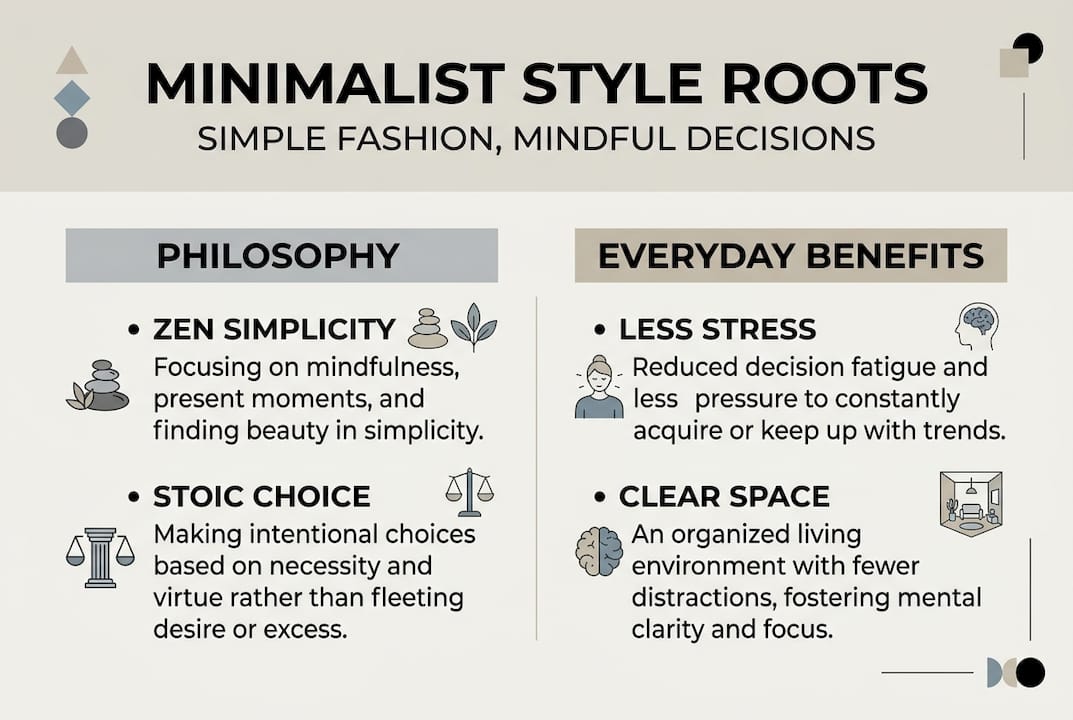
For young urban consumers, these ideas translate directly into fashion. Digital overwhelm, fast fashion fatigue, and the pressure to keep up with constantly shifting trends have made many people reconsider how they shop. Minimalist fashion promotes ethical consumer behaviour through moral identity and personal norms, leading to quality-over-quantity purchases rather than impulsive ones.
Minimalist wardrobes share several consistent traits:
- Simplicity: Clean lines, neutral or limited colour palettes, and uncluttered silhouettes.
- Timelessness: Pieces designed to last across seasons rather than reflect a single trend cycle.
- Flexibility: Items that work across multiple settings, from work to leisure, without requiring significant additions.
- Intentionality: Every piece has a clear reason for being there.
- Quality focus: Fewer items, but each chosen for durability and material integrity.
“The things you own end up owning you.” This idea, though often attributed to popular culture, reflects the core tension minimalism addresses: ownership should serve the person, not the other way round.
Minimalist style also connects directly to minimalist streetwear expression, where urban fashion becomes a form of quiet self-definition rather than loud branding. For those seeking a guide to conscious clothing, minimalism offers a practical starting point that aligns purchasing decisions with personal ethics.
The ethical and personal benefits of minimalist style
Adopting minimalist style has measurable effects on both behaviour and wellbeing. The most direct benefit is a reduction in impulse buying. When your wardrobe has a clear structure and purpose, random purchases become easier to resist. You ask different questions before buying: Does this fit what I already own? Does it reflect what I value? Will I still want this in two years?
Minimalist style aligns with ethical consumer behaviour and personal norms, meaning that people who adopt it tend to buy less overall but invest more in each item. This supports local and ethical producers, reduces textile waste, and lowers the environmental cost of your wardrobe over time.
There are also personal wellbeing benefits. A smaller, well-curated wardrobe reduces decision fatigue. When every item fits and works with everything else, getting dressed becomes straightforward rather than stressful. This is not a minor point: decision fatigue is a real cognitive load that accumulates throughout the day.
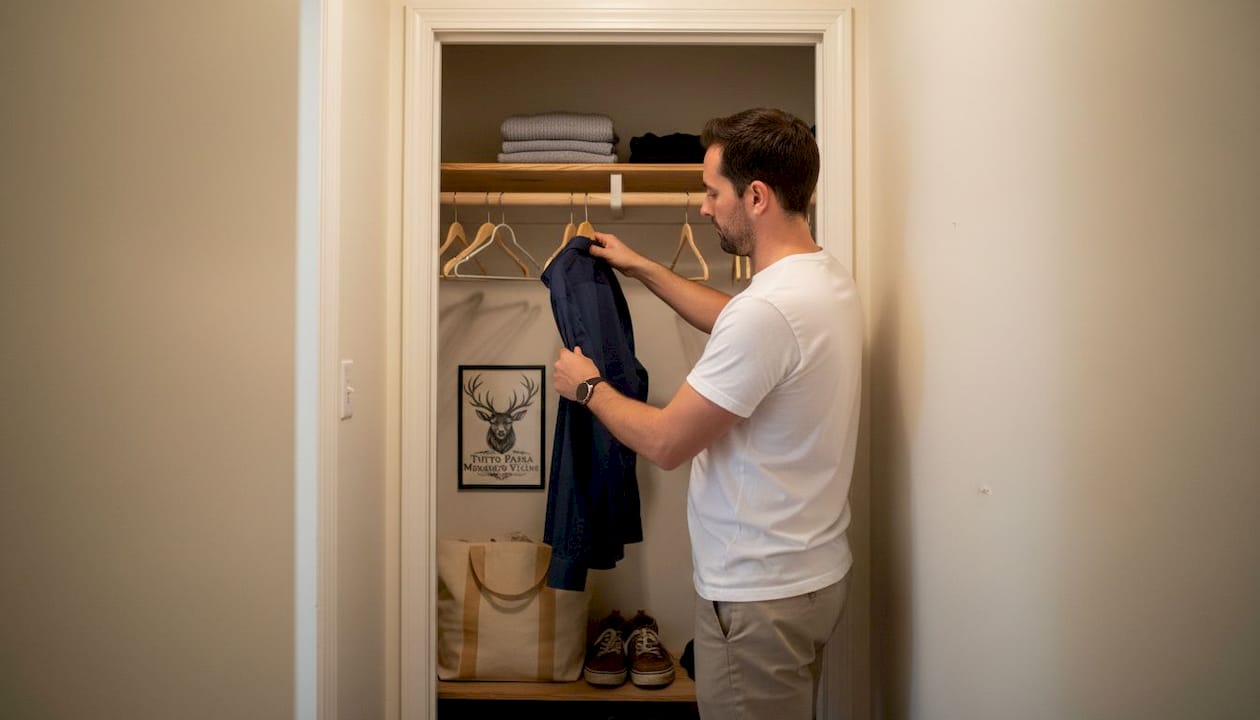
Pro Tip: Start by removing items you have not worn in six months. Do not replace them immediately. Live with the gap for a few weeks before deciding what, if anything, is actually missing.
However, the benefits are not universal. Minimalism boosts well-being and ethical choices but not equally for everyone. Research shows that eco-anxiety moderates these effects, and the benefits are stronger for Gen Z individuals with higher fashion knowledge. Those less informed about sustainable fashion may not experience the same clarity or motivation.
Here is a comparison of minimalist and conventional wardrobe approaches:
| Factor | Minimalist wardrobe | Conventional wardrobe |
|---|---|---|
| Purchase frequency | Low | High |
| Cost per item | Higher | Lower |
| Decision fatigue | Reduced | Increased |
| Environmental impact | Lower | Higher |
| Personal identity clarity | Stronger | Variable |
| Trend dependency | Low | High |
For those interested in conscious clothing and ethics, minimalism provides a clear entry point. It also connects naturally to philosophical fashion choices and nature-inspired fashion, both of which prioritise meaning over volume.
Common challenges and misconceptions about minimalism
Minimalism is frequently misrepresented. It is often portrayed as deprivation, elitism, or an aesthetic reserved for people who can afford expensive basics. These misconceptions are worth addressing directly.
First, minimalism is not about owning as little as possible. It is about owning what is right for you. A wardrobe of 15 carefully chosen pieces is minimalist. So is a wardrobe of 40 pieces, if each one is intentional and used regularly.
Second, the initial cost concern is real but manageable. Quality basics do cost more upfront. A well-made cotton T-shirt or structured jacket will carry a higher price tag than a fast fashion equivalent. Over time, however, fewer replacements and repairs make quality items more cost-effective. The challenge is bridging the upfront investment, particularly for younger consumers on tighter budgets.
Third, minimalism does not suit every personality or lifestyle. Minimalism can feel restrictive for dynamic lifestyles, leading to regret or higher initial costs. Some Gen Z consumers are actively shifting towards maximalism as a form of self-expression, finding that bold colour, layering, and eclectic combinations better reflect their identity.
Minimalism is a tool, not a moral standard. Choosing maximalism is not a failure. It is simply a different set of intentional choices.
Here are practical steps to avoid common minimalism mistakes:
- Audit before you edit. Understand what you actually wear before removing anything.
- Set your own rules. Define what minimalism means for your lifestyle, not someone else’s.
- Avoid the capsule wardrobe trap. A rigid formula of 33 items is a guideline, not a requirement.
- Budget incrementally. Replace items gradually as they wear out rather than overhauling everything at once.
- Allow for expression. Keep pieces that make you feel like yourself, even if they break the aesthetic rules.
For a broader view of how these principles apply to daily life, the minimalist lifestyle guide covers practical frameworks for clarity and personal growth beyond the wardrobe.
Pro Tip: If you are unsure whether to keep an item, wear it for a week. If you reach for it, it stays. If it sits untouched, that is your answer.
How to embrace minimalist style mindfully
Applying minimalist style in practice requires a clear process. The goal is not perfection but consistency with your values and lifestyle.
- Identify your priorities. What colours, silhouettes, and fabrics do you actually feel comfortable in? Write them down. This becomes your personal style reference.
- Audit your current wardrobe. Group items by how often you wear them. The top 20% you reach for most often reveals your actual style preferences.
- Build a flexible core. Choose five to ten versatile basics that work across multiple outfits. These are your foundation pieces.
- Add intentional statement pieces. One or two items with personality, symbolism, or visual interest prevent a wardrobe from feeling flat or impersonal.
- Review seasonally. Minimalist style is not static. Reassess every few months and adjust based on how your life and needs have changed.
Minimalism boosts well-being and supports meaningful, quality-focused purchases, particularly for Gen Z consumers with strong fashion awareness. The key is applying it in a way that fits your actual life rather than an idealised version of it.
Here is a basic framework for building a minimalist wardrobe:
| Category | Suggested items | Notes |
|---|---|---|
| Tops | 4 to 6 | Neutral tones, versatile cuts |
| Bottoms | 3 to 4 | Mix of casual and smart options |
| Outerwear | 1 to 2 | Quality investment pieces |
| Footwear | 2 to 3 pairs | Functional and versatile |
| Statement pieces | 1 to 2 | Expressive, personally meaningful |
For practical inspiration, urban minimalist streetwear shows how clean design and self-expression coexist. Those interested in deeper meaning can also explore using symbolism in fashion as a way to add personal significance without adding visual clutter.
Pro Tip: Photograph your outfits for two weeks. Patterns emerge quickly, and you will see exactly which pieces carry your wardrobe and which ones are just taking up space.
A fresh perspective on minimalism: More meaning, less pressure
The most common mistake people make with minimalist style is treating it as a set of rules to follow rather than a set of questions to ask. The question is not “how few items can I own?” It is “does what I own reflect what I value?”
Minimalism works best when it functions as a toolkit for self-awareness, not a standard for self-judgement. If you want colour, add it. If a maximalist phase feels right, explore it. The underlying discipline is intentionality, not restriction.
For urban millennials and Gen Z navigating fast fashion, social media pressure, and economic constraints, minimalism offers a practical counter-position: buy less, choose better, and let what you wear carry genuine meaning. That is not about aesthetics. It is about clarity.
The future of personal style is not uniform. It is personal. Minimalism adapts to the individual, not the other way round. Exploring nature-inspired fashion is one example of how minimalist principles can be applied with warmth, texture, and genuine character rather than cold austerity.
Minimalism, at its most useful, is simply a reminder to be deliberate. That is a principle worth keeping regardless of how many items are in your wardrobe.
Explore meaningful minimalist style with Memento Vivere Co
For those ready to apply minimalist principles to their wardrobe, Memento Vivere Co offers a curated range of clothing and accessories designed around simplicity, symbolism, and ethical production. Each piece is built with a clear purpose: to carry meaning without excess.
The collection includes options such as the signature recycled sports bra, which combines functional design with sustainable materials. Guides and product information on the site support informed, intentional purchasing decisions. Whether you are building a capsule wardrobe or looking for a single meaningful piece, the range is designed to complement a mindful approach to style.
Frequently asked questions
What makes minimalist style different from just having fewer clothes?
Minimalist style is about intentionality and ethical choices, not a fixed number of items. A wardrobe built on moral identity and personal norms reflects minimalism even if it contains more pieces than a typical capsule wardrobe formula suggests.
Does minimalist fashion have any downsides?
Yes. It can feel restrictive for dynamic lifestyles and may involve higher upfront costs. Some Gen Z are shifting to maximalism as a more expressive alternative, which is a valid and deliberate choice.
How can I start a minimalist wardrobe if I love creativity?
Focus on quality basics as a foundation and add a small number of expressive pieces that genuinely reflect your personality. Rigid rules are not required; consistency with your own values is.
Is minimalist style more sustainable for the environment?
Generally, yes. By prioritising quality and buying less frequently, minimalist style supports ethical consumer behaviour and reduces textile waste compared to high-volume, trend-driven purchasing habits.
Recommended
- Nature-inspired fashion: 5 proven benefits for mindful style – Memento Vivere Co
- Minimalist streetwear: Self-expression for urban youth – Memento Vivere Co
- What is conscious clothing? A guide to mindful fashion – Memento Vivere Co
- Minimalist lifestyle guide: clarity, growth, and style – Memento Vivere Co