
Purposeful fashion: mindful choices for modern lives
TL;DR:
- Purposeful fashion combines psychology, personal values, and sustainability to influence behavior and identity.
- Awareness of sustainability does not always lead to eco-friendly purchasing due to various barriers.
- Practical frameworks focus on durable materials, ecodesign, and curated wardrobes to promote longevity.
Fashion is often reduced to two conversations: what looks good right now, or what is better for the planet. Both matter, but neither tells the full story. Purposeful fashion sits at the intersection of psychology, personal values, sustainability, and practical urban living. It is not about following the right trends or buying the most ethical label. It is about understanding how clothing shapes behaviour, identity, and daily experience. This guide covers the psychological research, the real barriers to sustainable choices, practical design frameworks, and honest consumer strategies that urban young adults can apply immediately.
Table of Contents
- The psychology behind purposeful fashion
- Sustainability, values, and the attitude-behaviour gap
- Purposeful fashion frameworks: Material, design, and durability
- Mindful consumerism: Nuances and practical application
- Beyond trends: What most guides miss about purposeful fashion
- Purposeful fashion for mindful urban lifestyles
- Frequently asked questions
Key Takeaways
| Point | Details |
|---|---|
| Enclothed cognition | What you wear significantly shapes your mood, confidence, and daily experience. |
| Values vs. actions | Many claim sustainable intent, but actual choices often contradict these values. |
| Durability matters | Purposeful fashion emphasises material quality and ecodesign for lasting impact. |
| Mindful consumerism | True purposeful fashion means actively questioning motivations and buying less, not just eco-labels. |
| Beyond trends | Fashion that aligns with personal philosophy is more rewarding than following fleeting trends. |
The psychology behind purposeful fashion
Clothing does more than cover the body. It communicates, signals, and shapes how the wearer thinks and feels. This is not a vague idea. Researchers have identified a specific mechanism called enclothed cognition, which describes how the symbolic meaning of clothing influences psychological states. Clothing choices influence mood, confidence, and cognitive performance in measurable ways. What you wear changes how you perform, not just how others perceive you.
For urban young adults navigating demanding schedules, social environments, and personal goals, this has direct relevance. Choosing clothing intentionally, rather than defaulting to whatever is convenient or trending, becomes a form of daily self-regulation. It is a small but consistent act of alignment between values and behaviour.
“The clothes we wear carry symbolic meaning that feeds back into our psychological state. Dressing with intention is not vanity. It is a form of cognitive priming.”
Purposeful attire has also been linked to increased perceived competence, both in professional and social settings. Uniforms, for example, are not just functional. They signal role, responsibility, and identity. The same principle applies to personal style. When clothing reflects genuine values rather than external pressure, it supports a more stable and confident sense of self.
Key psychological benefits of purposeful dressing include:
- Improved mood through alignment between self-concept and appearance
- Greater confidence in social and professional interactions
- Reduced decision fatigue when a wardrobe is curated around clear values
- Stronger sense of identity and daily intentionality
- Better cognitive focus when clothing feels appropriate and meaningful
For those interested in building a purpose-driven clothing guide approach to style, the starting point is always internal. What values do you want your wardrobe to reflect? What does your clothing communicate when you walk into a room?
Pro Tip: Before buying anything new, ask whether it reflects a value you hold consistently, not just a mood you are in this week. Clothing chosen for lasting alignment outperforms clothing chosen for momentary appeal.
Sustainability, values, and the attitude-behaviour gap
Most urban young adults are aware of the environmental impact of fashion. Many express genuine concern. Yet Gen Z shows high awareness of sustainable fashion while continuing fast fashion consumption, a pattern researchers call the attitude-behaviour gap. Awareness does not automatically produce different behaviour.
This gap exists for several reasons. Price, convenience, social norms, and the sheer volume of marketing pressure all work against sustainable intentions. Sustainable options are sometimes harder to find, more expensive, or less immediately satisfying in terms of novelty and variety.
| Stated value | Common buying behaviour |
|---|---|
| Environmental concern | Continues purchasing fast fashion for price or convenience |
| Preference for quality | Buys trend-led pieces with short wear cycles |
| Anti-overconsumption | Adds secondhand items on top of existing volume |
| Support for ethical brands | Chooses familiar high-street brands under time pressure |
The gap is not a sign of hypocrisy. It reflects genuine complexity. Positive emotions, environmental concern, and personal values do drive sustainable intention. But barriers consistently interrupt the path from intention to action.
Factors that support sustainable fashion choices:
- Strong personal values aligned with environmental responsibility
- Access to affordable, well-designed sustainable options
- Social environments that normalise mindful consumption
- Clear information about a brand’s actual practices
Factors that undermine sustainable choices:
- Higher upfront cost of ethical or slow fashion
- Limited availability in mainstream retail environments
- Fast fashion’s speed and novelty advantages
- Lack of visible, immediate reward for sustainable behaviour
Understanding this gap is the first step to closing it. A conscious clothing guide approach does not demand perfection. It asks for honesty about where the gaps exist and what realistic steps look like. Tracking mindful streetwear trends can also help identify where purposeful design and accessible style overlap.
Purposeful fashion frameworks: Material, design, and durability
Translating intention into action requires practical frameworks. Slow and purposeful fashion methodologies involve multi-criteria material selection, ecodesign strategies for durability, and curated capsule wardrobes. These are not abstract principles. They are operational approaches used by designers and brands committed to longevity over volume.
Material selection in purposeful fashion considers technical performance, sensory comfort, and ethical sourcing simultaneously. A fabric might be organic but uncomfortable to wear. Another might be technically durable but produced under poor labour conditions. Purposeful selection weighs all three dimensions.
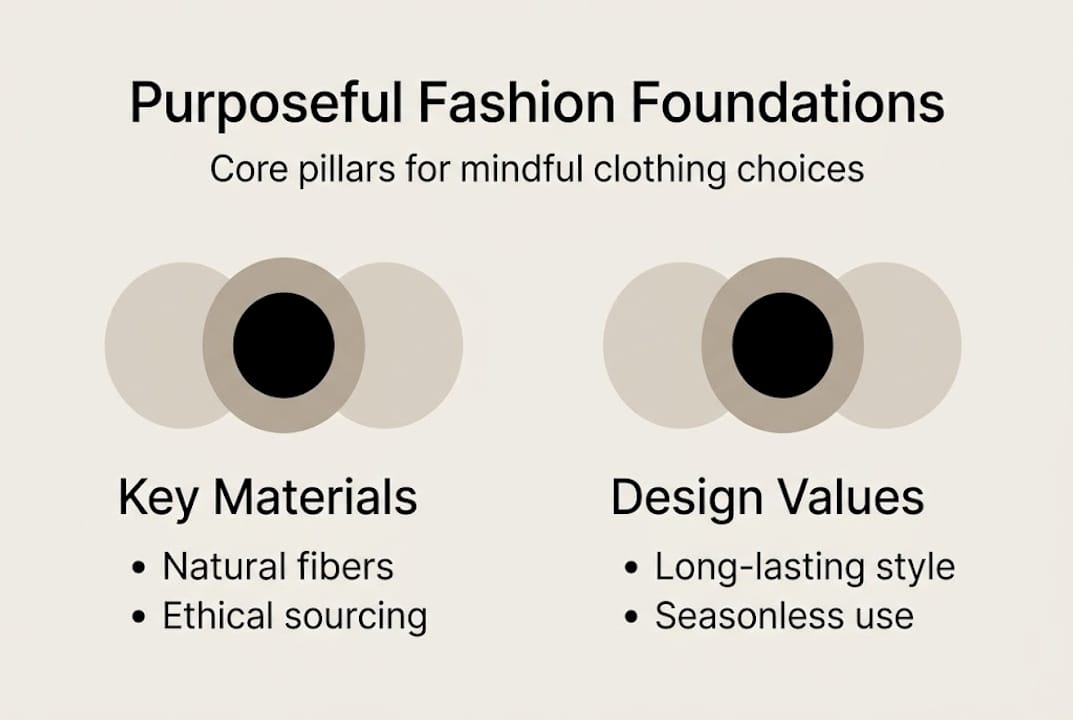
| Traditional fashion approach | Purposeful fashion approach |
|---|---|
| Trend-led design cycles | Values-led, season-independent design |
| Single-criteria material choice (cost or aesthetics) | Multi-criteria selection (technical, sensory, ethical) |
| Planned obsolescence | Ecodesign for longevity and repairability |
| Maximum variety, minimum cost | Curated capsule collections |
| High volume, low attachment | Lower volume, higher meaning per item |
Ecodesign is a specific methodology that builds durability into the product from the start. This includes reinforced stitching, colourfast dyes, repairable construction, and materials that age well rather than degrade quickly. The goal is to extend the useful life of each garment, reducing the environmental cost per wear.
Steps to build a purposeful wardrobe:
- Audit your current wardrobe and identify what you actually wear
- Define the values and functions your clothing needs to serve
- Remove items that do not align with those values or functions
- Research materials and brands using multi-criteria standards
- Add new pieces only when they fill a genuine gap
- Prioritise repairability and longevity in every purchase decision
For practical minimalist fashion examples that apply these principles, the focus is always on fewer, better pieces. A timeless streetwear guide approach applies the same logic to urban casual wear, prioritising cuts and materials that hold up across seasons and contexts.
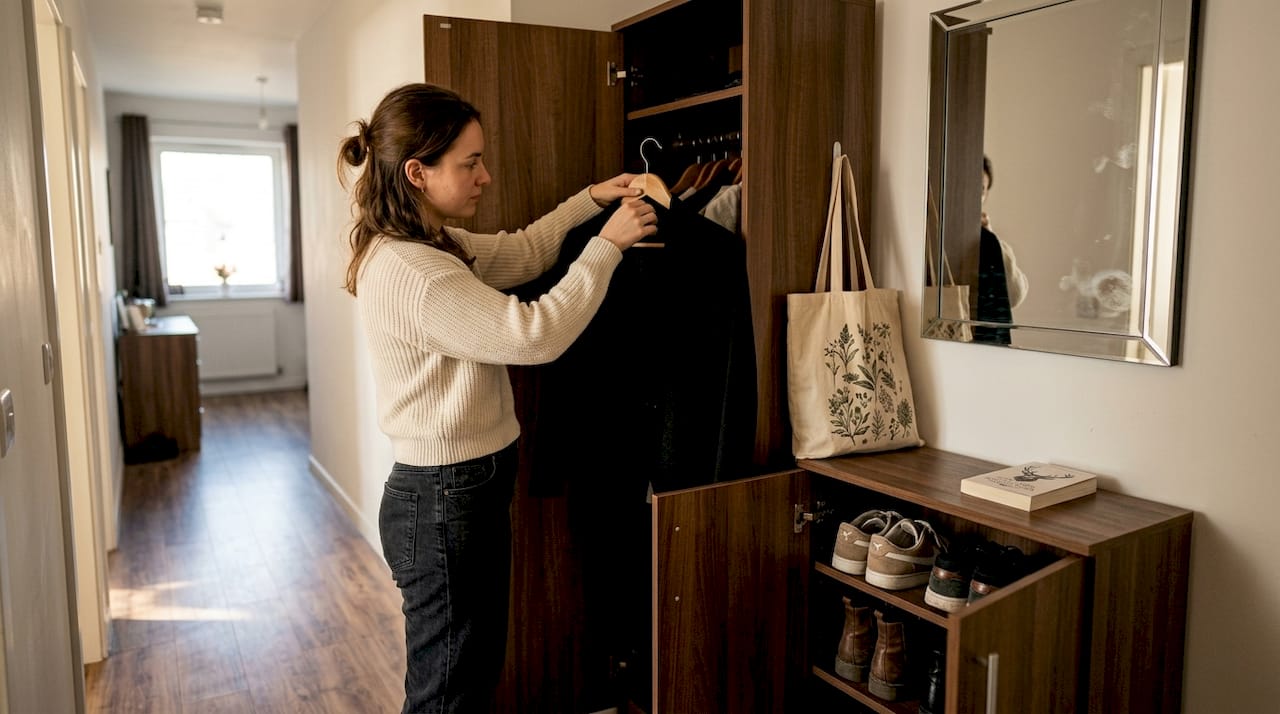
Mindful consumerism: Nuances and practical application
Purposeful fashion is not simply about buying sustainable products. The motivations behind consumer choices are more complex than they appear. Secondhand and vintage choices are often driven by hedonic appeal, the desire for uniqueness, or budget constraints rather than environmental concern. These choices may supplement fast fashion rather than replace it.
This matters because it challenges the assumption that any sustainable-seeming behaviour is automatically purposeful. A person who buys ten secondhand items per month is not necessarily consuming more mindfully than someone who buys two new, well-made pieces per year.
Another important concept here is moral licensing. Research shows that making one sustainable or ethical choice can create a psychological sense of permission to make less sustainable choices elsewhere. Buying an organic cotton t-shirt does not offset three impulse purchases the following week, but the brain sometimes treats it that way.
Expert research also indicates that verbal cues are more effective than visual cues for influencing sustainable behaviour among Gen Z consumers. Clear, direct information about a brand’s values and practices outperforms aesthetic signalling alone.
Practical steps for urban young adults to shop more purposefully:
- Set a defined number of new items per season before shopping
- Research brand practices using independent sources, not brand marketing
- Apply a 30-day waiting period before purchasing non-essential items
- Track cost-per-wear rather than upfront price
- Choose meaningful art and fashion that carries lasting personal relevance
For those exploring why to embrace minimalist style, the evidence points consistently towards greater satisfaction and less consumption. Nature-inspired fashion offers another angle, connecting design to values that extend beyond aesthetics.
Pro Tip: Before any purchase, audit your existing wardrobe against your stated values. If a gap exists between what you own and what you believe, address the values first. Buying more rarely solves a values misalignment.
Beyond trends: What most guides miss about purposeful fashion
Most articles on purposeful or sustainable fashion focus on individual actions. Buy better. Choose organic. Shop secondhand. These recommendations are not wrong, but they are incomplete. The fashion industry accounts for 2 to 8 percent of global greenhouse gas emissions, and individual choices, while meaningful, operate within a system that consistently pushes towards higher consumption.
The rebound effect is a real phenomenon. When individuals save money by buying secondhand, they often spend those savings on additional purchases. When brands introduce sustainable lines, they frequently expand overall product volume rather than replacing existing ranges.
“Individual action within a broken system is necessary but not sufficient. Purposeful fashion requires both personal alignment and systemic awareness.”
What most guides miss is that purposeful fashion is not primarily an aesthetic or environmental project. It is a values project. The question is not only what to buy, but why, and whether those reasons hold up under honest scrutiny. A philosophical apparel guide approach asks harder questions about identity, consumption, and what clothing is actually for.
Longevity and authenticity consistently outperform novelty as drivers of genuine satisfaction. Choosing fewer pieces with clear personal meaning produces more durable wellbeing than chasing trends, regardless of whether those trends are labelled sustainable or not.
Purposeful fashion for mindful urban lifestyles
Applying the principles covered in this guide becomes easier with products designed around the same values. Memento Vivere Co offers a curated range built on stoic philosophy, minimalist design, and lasting quality.
The signature backpack and signature drawstring bag are designed for urban daily use, combining functional construction with purposeful aesthetic detail. Each piece reflects the brand’s commitment to meaning over volume. For those building a wardrobe around clear values and lasting quality, Memento Vivere Co offers a practical starting point. Every item is selected for durability, design integrity, and alignment with a mindful urban lifestyle.
Frequently asked questions
How does purposeful fashion differ from sustainable fashion?
Purposeful fashion integrates sustainability with psychological wellbeing and personal values, going beyond eco-materials to intentional daily choices. Slow fashion frameworks include multi-criteria material selection, ecodesign, and curated wardrobes that serve both environmental and personal goals.
What is the attitude-behaviour gap in fashion?
It refers to the disconnect between people’s sustainable intentions and their actual purchasing behaviours, especially among Gen Z. Research confirms that high awareness of sustainable fashion does not reliably translate into sustainable purchasing decisions.
Can secondhand and vintage shopping reduce environmental impact?
It can, but the motivation often matters as much as the action. Secondhand choices are frequently driven by uniqueness or budget rather than eco-concern, and may supplement rather than replace fast fashion consumption.
How does fashion influence mood and confidence?
Clothing choices influence psychological states through enclothed cognition, a process where the symbolic meaning of garments affects mood and performance. Research links intentional dressing to measurable improvements in confidence and cognitive focus.
Recommended
- Purpose-driven clothing: a guide to mindful style – Memento Vivere Co
- Inspirational fashion trends: Mindful streetwear for 2026 – Memento Vivere Co
- What is conscious clothing? A guide to mindful fashion – Memento Vivere Co
- Nature-inspired fashion: 5 proven benefits for mindful style – Memento Vivere Co