
Nature inspired clothing: top brands, materials and choices
TL;DR:
- Authentic nature inspired clothing emphasizes sustainable materials, biomimicry, ethical production, and resilience.
- Leading brands focus on transparency, natural fibers, and long-lasting, minimalist designs rooted in philosophy.
- Innovative methods like biomimicry, bog dyeing, and algae growth push sustainable fashion towards genuine provenance and uniqueness.
Finding clothing that genuinely reflects a connection to nature is harder than it looks. The sustainable fashion market is crowded with vague claims, recycled polyester marketed as ‘eco,’ and designs that borrow nature’s aesthetics without its values. For those seeking minimalist, resilient style rooted in philosophy, the challenge is real. This article outlines the key selection criteria, profiles the leading brands, compares the best materials, and presents a practical decision-making framework. By the end, you will have the tools to build a wardrobe that is both meaningful and durable.
Table of Contents
- How to choose nature inspired clothing: criteria that matter
- Top nature inspired clothing brands for 2026
- Best materials for nature inspired and minimalist clothing
- Innovative approaches: biomimicry, bog dye and the art of resilience
- Making your choice: practical steps for mindful, resilient style
- Why true nature inspired style goes beyond the fabric
- Discover nature inspired minimalism with Memento Vivere Co
- Frequently asked questions
Key Takeaways
| Point | Details |
|---|---|
| Define clear criteria | Choose clothing using transparent materials, ethical production, and nature-inspired philosophy. |
| Trust proven brands | Look for brands with genuine eco credentials, slow fashion values, and minimalist design. |
| Prioritise best materials | Select fibres like organic cotton, linen, hemp and TENCEL for balanced sustainability and comfort. |
| Embrace innovative methods | Explore pioneering techniques like biomimicry and bog dyeing for extra resilience and meaning. |
| Think long-term | Focus on durability, cost-per-wear, and items that truly express your values for a wiser wardrobe. |
How to choose nature inspired clothing: criteria that matter
Having set the stage with the selection challenge, let’s outline exactly what to look for in nature inspired clothing.
Authentic nature inspired clothing rests on several clear criteria. Each one connects to a broader set of values: long-term wear, low-impact production, and a genuine relationship between the wearer and the natural world. Understanding these criteria protects against greenwashing and guides smarter purchasing decisions.
- Material sustainability. The fibre used in a garment determines much of its environmental footprint. Organic cotton, linen, hemp, and TENCEL all carry lower impacts than virgin synthetics. Sustainable design metrics confirm that material selection is one of the most significant levers in reducing a garment’s lifecycle impact.
- Biomimicry. Biomimicry in fashion involves imitating natural structures such as lotus leaves, spider silk, and butterfly wings to create fabrics with superior function and minimal waste. This approach produces clothing that performs like nature rather than simply resembling it.
- Ethical production. Supply chain transparency, fair wages, and low-waste manufacturing are non-negotiable markers of genuine eco-positioning. Look for third-party certifications such as GOTS, Fair Trade, or B Corp.
- Minimalist design philosophy. Timeless pieces from natural fibres reduce consumption by extending wear cycles and resisting trend-driven obsolescence. Fewer, better pieces is the practical outcome of this philosophy.
- Resilience. Clothing designed to last, repair, and age well embodies the same resilience found in natural systems. The benefits for mindful style extend beyond aesthetics into daily perspective and purpose.
Pro Tip: Check whether a brand publishes its supply chain data and material certifications publicly. If that information is absent or vague, treat the ‘eco-friendly’ label with caution.
“Biophilic design is not decoration. It is a structural response to the human need for connection with natural systems, and it underpins resilience in both built environments and personal choices.” — Sustainable Design Research, 2025
For a deeper look at why this approach matters, meaningful fashion for mindful lives sets out the philosophical case clearly.
Top nature inspired clothing brands for 2026
With firm criteria in hand, here are the brands that genuinely live those principles.
Minimalist, eco-conscious brands using natural and organic materials include a growing number of labels worth knowing. Each one brings a distinct approach to nature inspired design.
- True Nature Attire. Focuses on plant-based dyes and organic cotton. Designs are stripped back, functional, and built for longevity rather than seasonal trends.
- MoriTribe. Draws on forest aesthetics and hand-crafted production. Each piece is made in small batches, reducing overproduction and waste.
- MATE the Label. Certified organic and fair trade throughout. Uses GOTS-certified cotton and publishes full supply chain transparency reports.
- Eileen Fisher. A long-standing leader in sustainable minimalism. Operates a take-back programme called Renew, which repairs and resells worn garments to extend their life.
- tentree. Plants over 100 million trees and counting, with each purchase tied directly to verified reforestation projects. Uses sustainable materials including organic cotton, recycled polyester, and TENCEL.
For a broader view of how these brands position themselves philosophically, examples, brands and philosophy provides useful context. Some designers are also experimenting with natural dyeing techniques drawn directly from soil and plant matter, producing colours that are entirely unique and non-toxic.
If the ethos behind a label matters as much as the product itself, philosophical apparel explores why considered design and values-driven purchasing reinforce each other.
Best materials for nature inspired and minimalist clothing
The best brands all rely on equally thoughtful materials. Here is what to know about each.
Natural fibres such as organic cotton, hemp, and linen consistently show lower environmental impact than synthetic alternatives across most lifecycle categories. However, no fibre is without trade-offs.
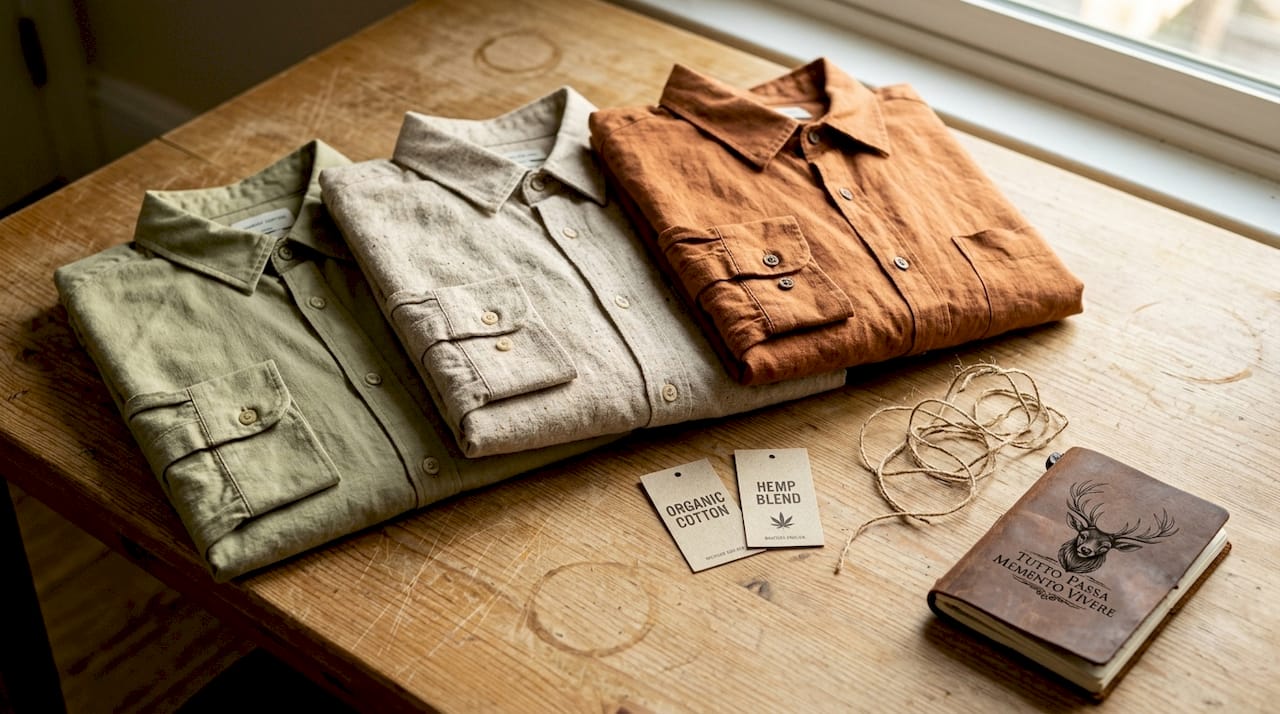
| Material | CO₂ impact | Water use | Durability | Biodegradable | Cost per wear |
|---|---|---|---|---|---|
| Organic cotton | Low | Moderate | Good | Yes | Low |
| Linen | Very low | Very low | Excellent | Yes | Low |
| Hemp | Very low | Low | Excellent | Yes | Low |
| TENCEL | Low | Low | Good | Yes | Low |
| Bamboo | Moderate | Low | Moderate | Partial | Moderate |
| Natural wool | Moderate | Low | Excellent | Yes | Very low |
Each fibre has a best-use scenario:
- Organic cotton: Everyday basics, T-shirts, and casual wear
- Linen: Warm-weather garments and layering pieces
- Hemp: Outerwear, bags, and high-wear items
- TENCEL: Soft, draping garments and activewear
- Bamboo: Underwear and base layers
- Natural wool: Cold-weather and transitional pieces
For a fuller environmental comparison of textiles, lifecycle analysis tools now allow direct comparisons across production, use, and end-of-life phases.
Pro Tip: Prioritise durability and supply chain transparency over recycled synthetics. A recycled polyester garment still sheds microfibres and does not biodegrade. A well-made linen shirt, worn for a decade, carries a fraction of the impact.
For practical guidance on building a purpose-driven clothing wardrobe around these materials, the linked resource covers the mindset shift required.
Innovative approaches: biomimicry, bog dye and the art of resilience
Beyond established brands and fibres, the cutting edge of nature inspired design offers even more creative options.
Biomimicry methodologies now extend from spider silk-inspired tensile fibres to pinecone-reactive textiles that open and close with humidity. These are not concepts. They are in production.
Bog dyeing submerges fabrics in peat bogs over months or years, producing colours shaped entirely by microbial activity, mineral content, and decay. The results are unrepeatable. Designers working with this method describe it as a collaboration with the landscape rather than a manufacturing process. Iris van Herpen has created living algae gowns that grow and change after production, pushing the boundary between clothing and living organism.
| Technique | Scalability | Cost | Uniqueness | Environmental impact |
|---|---|---|---|---|
| Conventional dyeing | High | Low | Low | High (chemicals) |
| Biomimicry fabrics | Moderate | High | High | Low to moderate |
| Bog dyeing | Low | Moderate | Very high | Very low |
| Algae-grown materials | Low | Very high | Very high | Very low |
| 3D-printed bio-materials | Moderate | High | High | Low |
“Working with bogs means accepting that you are not in control. The landscape decides the outcome. That is not a limitation. It is the point.” — Independent textile designer, 2024
For those following mindful streetwear trends in 2026, these innovations signal a shift away from mass production towards clothing that carries genuine provenance and irreplaceable character.
Making your choice: practical steps for mindful, resilient style
You have seen the principles, brands, and innovations. Here is how to put them into action.
- Identify your values first. Before browsing, list what matters most: material origin, production ethics, design longevity, or philosophical alignment. This prevents impulse purchases dressed up as conscious ones.
- Assess material and production claims. Cross-reference brand claims with certifications. GOTS, Fair Trade, and B Corp are independently verified. Vague terms like ‘natural’ or ‘conscious’ are not.
- Use comparison data. Apply the material table from the previous section. Match fibre choice to intended use and wear frequency. Durability extends garment life, reducing overall footprint and improving the sustainability index score of each purchase.
- Favour durability and philosophy over novelty. A garment that lasts ten years and carries meaning outperforms five trend-driven pieces in both environmental and personal value.
- Balance budget with cost-per-wear. A £120 linen jacket worn 200 times costs £0.60 per wear. A £30 fast fashion equivalent worn 10 times costs £3.00 per wear.
Pro Tip: Calculate cost-per-wear before every purchase. Divide the price by the realistic number of times you will wear it in three years. If the number is above £2.00, reconsider.
For those building out a complete considered wardrobe, minimalist accessories and stoic fashion for resilience offer practical next steps beyond clothing alone.
Why true nature inspired style goes beyond the fabric
With practical steps outlined, it is worth reconsidering what makes clothing choices truly meaningful.
Material choice is necessary but not sufficient. A wardrobe built from organic cotton and certified linen still misses the point if the purchasing behaviour behind it remains impulsive and volume-driven. Biophilic design fosters human-nature connection and supports resilience through slow, considered consumption models. The fabric is the starting point, not the destination.
Minimalism and biophilic design work together because both resist excess. Both ask the same question: what is actually necessary? Clothing chosen for durability, meaning, and material integrity becomes a daily practice rather than a retail transaction. That shift in perspective is where genuine satisfaction begins.
A purpose-driven clothing mindset treats each garment as a considered decision rather than a default. Over time, those decisions accumulate into a wardrobe that reflects values rather than trends. That is the practical outcome of treating clothing as philosophy.
Discover nature inspired minimalism with Memento Vivere Co
If you are ready to bring philosophy and nature to your daily wardrobe, here is where to begin.
Memento Vivere Co designs minimalist accessories and bags built around the values covered in this article: durability, meaning, and a clear connection to nature. The brand’s stag symbol reflects resilience and renewal, carried quietly into everyday use.
The signature backpack and signature drawstring bag are designed for long-term use, with clean lines and purposeful construction. Each piece is a considered addition to a wardrobe built on intention rather than impulse. For those committed to meaningful, minimalist style, the collection offers a practical and philosophically grounded starting point.
Frequently asked questions
What makes clothing ‘nature inspired’?
Nature inspired clothing uses biomimicry, natural materials, and design philosophies that imitate or honour the structures, patterns and resilience of the natural world. It goes beyond surface aesthetics to incorporate functional and ethical principles drawn from natural systems.
Are natural fibres always better than synthetics?
Natural fibres are more biodegradable and renewable but can require more land and water than some synthetics. The best choice depends on full lifecycle analysis rather than a single metric.
How can I spot greenwashing in ‘sustainable’ fashion labels?
True nature inspired brands prioritise material transparency, durability, and third-party certifications over vague claims. Process eco-positioning is valued over product labelling alone, so look for verifiable evidence rather than marketing language.
What is bog dyeing and is it sustainable?
Bog dyeing submerges fabrics in peat bogs to achieve unique colours and patterns shaped by microbial activity and mineral content. It is a slow, low-chemical process that embraces natural unpredictability as part of the design.
Why does durability matter in nature inspired wardrobes?
Longer-lasting clothes reduce environmental impact by cutting consumption and maximising cost-per-wear across the garment’s full lifecycle. Durability is one of the highest-weighted factors in current apparel sustainability indices.
Recommended
- Nature-inspired fashion: 5 proven benefits for mindful style – Memento Vivere Co
- Purpose-driven clothing: a guide to mindful style – Memento Vivere Co
- Inspirational fashion trends: Mindful streetwear for 2026 – Memento Vivere Co
- Purposeful fashion: mindful choices for modern lives – Memento Vivere Co