
Why wear meaningful clothing: stoic fashion for resilience
TL;DR:
- Clothing rooted in stoic minimalism fosters resilience, focus, and alignment with personal values.
- Meaningful minimalist fashion reduces decision fatigue and promotes sustainable, ethical living.
- Symbolic clothing items serve as psychological cues, enhancing mindset and daily mental clarity.
What you wear is not simply a matter of appearance. Clothing shapes how you think, how you behave, and how you navigate the pressures of urban life. For mindful consumers seeking more than seasonal trends, the intersection of stoic philosophy, minimalist design, and symbolic meaning offers a practical framework for daily resilience and mental clarity. This article covers the philosophical roots of meaningful fashion, the psychological mechanisms that make it work, and concrete steps to build a wardrobe that supports purpose and wellbeing. Whether you are new to stoic thinking or already simplifying your lifestyle, the following sections provide structured, evidence-based guidance.
Table of Contents
- The philosophy of meaningful clothing: stoic roots and minimalist values
- Psychological power: how meaningful clothing shapes mindset and resilience
- Beyond trends: minimalist clothing and sustainable urban living
- Ethics, identity, and generational nuance in mindful fashion
- Practical steps: how to build a wardrobe with meaning and resilience
- Our perspective: why stoic fashion is more than a trend
- Explore meaningful minimalist clothing and accessories
- Frequently asked questions
Key Takeaways
| Point | Details |
|---|---|
| Stoic fashion builds resilience | Wearing meaningful clothing based on stoic principles strengthens daily focus and virtue. |
| Minimalist clothing reduces stress | Simplified wardrobes lower decision fatigue and promote mental clarity for urban living. |
| Symbolism enhances mindset | Choosing garments with personal meaning can anchor positive habits and resilient thinking. |
| Sustainability needs action | Meaningful clothing supports sustainability, but mindful action is required to overcome barriers. |
The philosophy of meaningful clothing: stoic roots and minimalist values
Stoic philosophy offers a clear starting point for understanding why clothing matters beyond aesthetics. Stoic minimalism, as practised by Marcus Aurelius and Seneca, promotes minimal possessions and simple dress as a means of focusing on virtue, reducing attachment, and building resilience. The logic is direct: when you are not preoccupied with accumulating or displaying possessions, you direct attention towards what you can control, your values, your actions, and your responses to circumstance.
Minimalism in clothing is not about deprivation. It is about deliberate selection. Each item in a minimalist wardrobe is chosen for function and meaning rather than novelty or status. This approach aligns closely with the stoic concept of amor fati, accepting and working within your circumstances rather than resisting them. A meaningful minimalist style removes the noise of excess and leaves only what serves you.
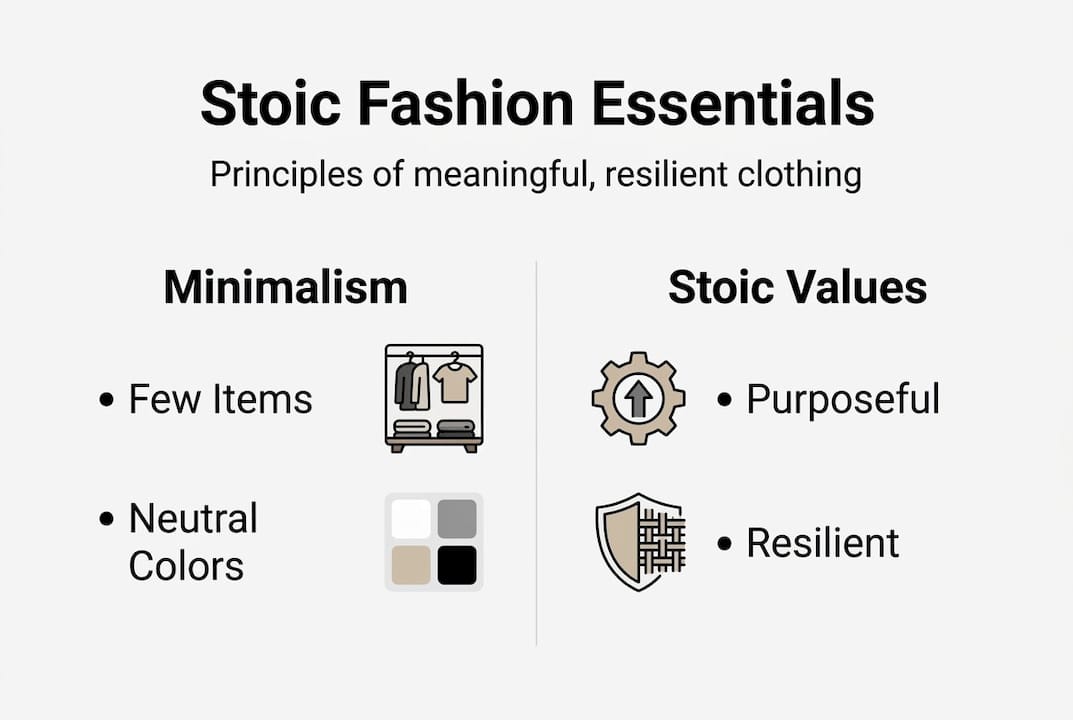
For urban dwellers, this is particularly relevant. Cities present constant visual and social stimulation. Fast fashion cycles, advertising, and peer comparison create pressure to keep acquiring. Stoic-inspired clothing habits offer a counterpoint to that pressure.
Here are practical stoic-inspired clothing habits to consider:
- Choose items that reflect your values, not current trends
- Limit your wardrobe to pieces you wear regularly and with intention
- Select fabrics and designs that are durable and timeless
- Avoid purchasing driven by social comparison or impulse
- Prioritise quality over quantity in every category
The minimalist fashion philosophy is not new. What is new is its application to daily urban life as a tool for mental focus and ethical living.
“He who is not satisfied with a little is satisfied with nothing.” — Epicurus, a foundational influence on stoic thought regarding material possessions.
This perspective reinforces that clothing, when stripped of excess, becomes a quiet statement of priorities rather than a performance for others.
Psychological power: how meaningful clothing shapes mindset and resilience
Philosophy provides the framework. Psychology explains the mechanism. The concept of enclothed cognition describes how the symbolic meaning of clothing influences the wearer’s psychological state and behaviour. In short, what you wear affects how you think and act, not just how others perceive you.
Research supports this. When people wear clothing associated with specific qualities, such as precision, strength, or calm, they tend to embody those qualities more fully. A symbolic item, a stag motif, a stoic phrase, or a minimalist design, functions as a daily cue. It prompts a particular mental state before the day begins.
The following table illustrates how specific symbols translate into psychological effects:
| Symbol | Associated meaning | Psychological effect |
|---|---|---|
| Stag | Strength, renewal, independence | Increased sense of resilience and forward focus |
| Minimalist line art | Clarity, simplicity | Reduced cognitive noise, sharper decision-making |
| Philosophical phrase | Perspective, acceptance | Grounded response to stress and uncertainty |
| Natural motifs | Connection, awareness | Calm, present-moment attention |
Building a daily resilience routine around clothing is straightforward. The act of selecting a meaningful item in the morning becomes a small ritual. It signals intention. It creates a brief moment of reflection before the demands of the day begin. Symbolism in fashion does not require elaborate choices. One item is sufficient to anchor the practice.
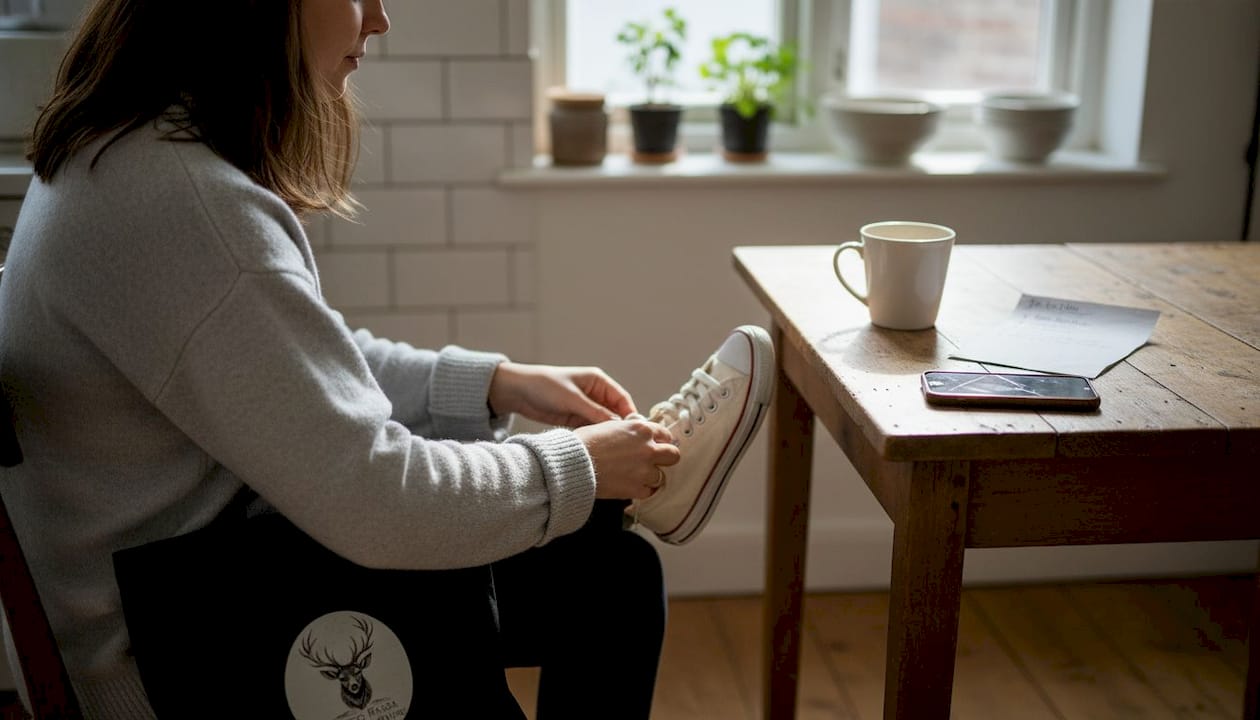
This is also relevant for self-expression through minimalist streetwear, where the visual language is restrained but the personal significance is high. Urban consumers who adopt this approach report greater consistency in mood and focus throughout the day.
Pro Tip: Begin with a single symbolic item, a cap, a bag, or a garment with a meaningful motif. Wear it consistently for two weeks and observe whether it functions as a reliable mindset cue before demanding situations.
Beyond trends: minimalist clothing and sustainable urban living
Once the psychological value of meaningful clothing is clear, the practical benefits of minimalism become equally apparent. Minimalist fashion reduces decision fatigue, promotes mental clarity, supports sustainability, and aligns with mindful living for urban consumers.
Decision fatigue is a well-documented phenomenon. Each choice you make throughout the day draws on a finite cognitive resource. A wardrobe of excess forces unnecessary decisions every morning. A curated, minimalist wardrobe removes that friction. You spend less mental energy on clothing and more on what matters.
The environmental case is equally clear. Fast fashion produces enormous waste. Minimalist wardrobes, by contrast, favour durable, versatile pieces that last longer and require fewer replacements. The benefits of mindful style extend beyond the individual to include reduced consumption and lower environmental impact.
The following comparison illustrates the difference between fast fashion and meaningful minimalist clothing:
| Factor | Fast fashion | Meaningful minimalist clothing |
|---|---|---|
| Decision fatigue | High (constant new choices) | Low (curated, consistent wardrobe) |
| Environmental impact | High (frequent disposal) | Low (durable, long-lasting pieces) |
| Mental clarity | Low (visual and cognitive clutter) | High (intentional, focused selection) |
| Cost over time | Higher (frequent replacement) | Lower (quality items retained longer) |
| Alignment with values | Weak (trend-driven) | Strong (value-driven) |
To simplify your wardrobe for wellbeing, follow these steps:
- Audit your current wardrobe and remove items worn fewer than five times in the past year
- Identify three to five core values you want your clothing to reflect
- Select versatile basics in neutral tones that work across multiple contexts
- Add one or two symbolic pieces that carry personal or philosophical meaning
- Commit to a one-in, one-out rule for all future purchases
The minimalist lifestyle guide provides additional structure for applying these principles across other areas of daily life.
Ethics, identity, and generational nuance in mindful fashion
The relationship between minimalism, ethics, and actual purchasing behaviour is more complex than it first appears. Research confirms that a minimalism value positively links to ethically minded behaviour through moral identity, a finding confirmed across both Indian and US consumer samples. In other words, people who genuinely embrace minimalism are more likely to act in alignment with ethical consumption principles.
However, intention does not always translate into action. This gap is particularly visible among younger urban consumers. Gen Z shows the lowest rate of sustainable purchasing despite reporting the highest levels of concern about environmental and ethical issues. This is the sustainability paradox: values and behaviour do not automatically align.
Several barriers explain this disconnect:
- Cost: Sustainable and meaningful clothing often carries a higher upfront price
- Accessibility: Ethical brands are not always available in all urban retail environments
- Convenience: Fast fashion platforms offer speed and ease that ethical alternatives cannot always match
- Social pressure: Peer influence and trend cycles pull against deliberate, slow purchasing
- Information overload: Greenwashing and conflicting claims make it difficult to identify genuinely ethical options
Understanding these barriers is essential for making purposeful fashion choices that are realistic and sustainable over time. Acknowledging the gap between values and behaviour is the first step towards closing it. Meaningful clothing does not require perfection. It requires consistent, incremental progress.
Practical steps: how to build a wardrobe with meaning and resilience
With the barriers identified, a concrete approach becomes more useful than abstract ideals. The symbolic power of clothing is well established: clothing transitions states, aligns with stoic detachment, and creates mental boundaries. Overcasualisation, by contrast, blurs roles and erodes the psychological structure that supports focus and resilience.
Building a meaningful wardrobe does not require a complete overhaul. It requires a structured process applied gradually.
- Evaluate your current wardrobe using stoic criteria. Ask of each item: does this serve a clear function? Does it reflect a value I hold? If neither, it is a candidate for removal.
- Define your symbolic anchors. Choose one or two symbols, motifs, or phrases that carry genuine personal meaning. These become the foundation of your intentional pieces.
- Declutter systematically. Remove items that create visual noise or were purchased reactively. Keep only what you would choose again today.
- Select sustainable basics. Choose durable, neutral-toned garments that work across contexts. Prioritise natural or long-lasting materials.
- Introduce one meaningful piece at a time. Avoid wholesale replacement. Add items gradually, allowing each one to settle into your routine.
- Review seasonally. Reassess your wardrobe every three months using the same stoic criteria.
Pro Tip: Choose one item with a symbolic motif and wear it specifically during challenging periods, before a difficult meeting, a demanding training session, or a stressful commute. Use it as a deliberate trigger for a focused, resilient mindset.
For further context on current directions in this space, mindful streetwear trends offer a useful reference point for how these principles are being applied in 2026.
Our perspective: why stoic fashion is more than a trend
Most fashion brands focus on appearance. The product is the point. What it does to the wearer’s internal state is rarely considered. This is where the majority of brands, even those using stoic or philosophical language in their marketing, miss the deeper purpose.
Meaningful clothing is not an aesthetic. It is a functional tool. The ritual of selecting a purposeful item, the daily visual cue of a symbol that carries weight, the absence of clutter in a curated wardrobe: these are not lifestyle accessories. They are structural supports for mental clarity and consistent behaviour.
A wardrobe built on stoic principles does not fluctuate with trends. It remains stable. That stability is itself a form of resilience. When external circumstances shift, as they always do, your clothing continues to reflect your values rather than the noise around you. This is the deeper meaning in fashion that most consumers and brands overlook. It is not about looking a certain way. It is about maintaining a consistent internal orientation regardless of what changes outside.
Explore meaningful minimalist clothing and accessories
For those ready to move from principle to practice, Memento Vivere offers a range of stoic-inspired clothing and accessories designed for exactly this purpose. Each piece is built around the philosophy of Tutto Passa, Memento Vivere: everything passes, remember to live. The stag symbol, central to the brand, carries the values of strength, renewal, and resilience in a minimal, wearable format.
The Signature Backpack is a practical starting point: a functional daily carry item that integrates stoic symbolism into an everyday object. For a broader view of available pieces, the full collection of more meaningful pieces covers clothing and accessories designed to support a purposeful, minimalist lifestyle.
Frequently asked questions
What makes an item of clothing ‘meaningful’?
Meaningful clothing is purposefully chosen for its alignment with your values, intentions, or personal philosophy. As outlined in conscious clothing guidance, it functions as a daily reminder or psychological cue for mindful living.
How does minimalist fashion reduce decision fatigue?
By limiting your wardrobe to a smaller set of versatile, intentional items, you remove unnecessary daily choices. Minimalist fashion reduces cognitive load and supports clearer, faster decision-making throughout the day.
Is meaningful fashion always sustainable?
Not automatically. While meaningful fashion encourages thoughtful purchasing, Gen Z data confirms that high concern does not always translate into sustainable action, due to cost, convenience, and accessibility barriers.
Can a single item of clothing really impact my mindset?
Yes. A single symbolic piece can act as a psychological trigger for resilience and focus. The principle of enclothed cognition confirms that symbolic clothing shapes behaviour and mental state, even when worn alone.
Recommended
- Purpose-driven clothing: a guide to mindful style – Memento Vivere Co
- Inspirational fashion trends: Mindful streetwear for 2026 – Memento Vivere Co
- Why embrace minimalist style: Meaningful fashion for mindful lives – Memento Vivere Co
- Why choose philosophical apparel: style for mindful lives – Memento Vivere Co